
 Contact
 How to shop
Delivery
Shopping guide
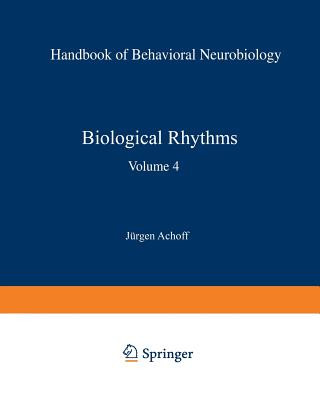
Biological Rhythms
 English
 125 b
125 b
30-day return policy
Customers also purchased





















 /
/
 Paperback
 30.78
€
30.78
€

 /
Hardback
13.66
€
/
Hardback
13.66
€





Interest in biological rhythms has been traced back more than 2,500]ears to Archilochus, the Greek poet, who in one of his fragments suggests ",,(i,,(VWO'KE o'olos pv{}J.tos txv{}pW7rOVS ~XH" (recognize what rhythm governs man) (Aschoff, 1974). Reference can also be made to the French student of medicine J. J. Virey who, in his thesis of 1814, used for the first time the expression "horloge vivante" (living clock) to describe daily rhythms and to D. C. W. Hufeland (1779) who called the 24-hour period the unit of our natural chronology. However, it was not until the 1930s that real progress was made in the analysis of biological rhythms; and Erwin Bunning was encouraged to publish the first, and still not outdated, monograph in the field in 1958. Two years later, in the middle of exciting discoveries, we took a breather at the Cold Spring Harbor Symposium on Biological Clocks. Its survey on rules considered valid at that time, and Pittendrigh's anticipating view on the temporal organization of living systems, made it a milestone on our way from a more formalistic description of biological rhythms to the understanding of their structural and physiological basis.


About the book
English

Give this book today
It's easy
1 Add to cart and choose Deliver as present at the checkout 2 We'll send you a voucher 3 The book will arrive at the recipient's addressYou might also be interested in







 /
Paperback
21.66
€
/
Paperback
21.66
€







Hi! I'm Libroamiko, your book advisor.
How can I help you?