
 Contact
 How to shop

Delivery
Shopping guide
Brainology
Understanding, Developing and Training Your Brain
 English
 48 b
 New
Up to 30 days for returns

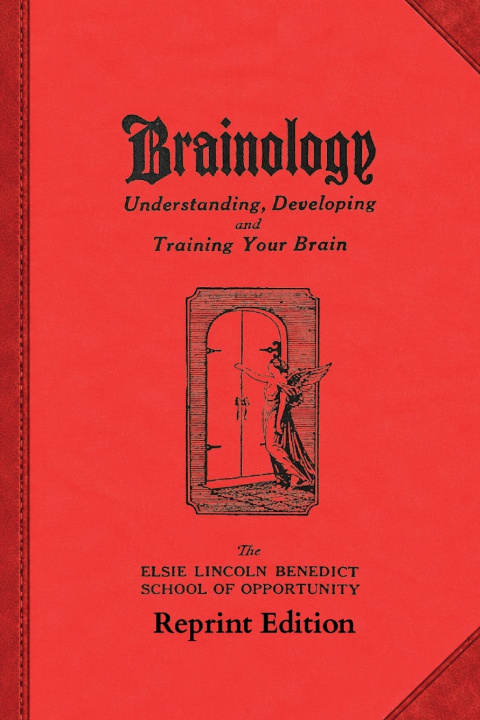
Can you train your brain? Elsie Lincoln Benedict and Ralph Paine Benedict believed you could. In this illustrated 1928 classic, they show how, in plain, lively language.
Brainology treats your head as the headquarters of everything you do. The authors compare it to a lookout tower and a busy business office, with the senses reporting in over the "telephone wires" of the nerves. From there they turn to practical questions that readers of any era will recognize: why nerves get frayed, how to sleep more deeply, how to focus the mind, what to eat and drink for clear thinking, how to remember what matters, how to read well, how to be creative, and how to keep learning at any age.
The book is full of stories and comparisons. You will meet Archimedes, Dickens and Edison, a telephone system that needs a trained operator, and an energy account that can be saved, spent and invested like money in a bank. It also tells of Theodor Mommsen, who finished his great history of Rome at the age of eighty-six.
What is inside
- Chapter 1: The Wonderful Headquarters of the Skull
- Chapter 2: The Cause and Cure of Nervousness
- Chapter 3: How to Sleep Soundly and Scientifically
- Chapter 4: How to Concentrate so as to Do Ten Times the Brain-Work You Are Now Doing, with One-Tenth the Effort
- Chapter 5: How to Eat and Drink for Best Brain-Work
- Chapter 6: How to Have a "Marvelous Memory"
- Chapter 7: How and What to Read
- Chapter 8: The Creative Brain
- Chapter 9: Preventing Fatigue and Brain-Fag
- Chapter 10: How to Grow Brains Indefinitely
This edition includes the 44 charts from the original book, numbered 4 to 47, so you can see the illustrations as readers did in 1928.
Who will enjoy it. Readers of vintage self-help and New Thought classics, students of the history of popular psychology, and anyone curious about how people in the 1920s thought about memory, focus, sleep, stress and creative work.
About the authors. Elsie Lincoln Benedict (1885-1970) was a lecturer and author on practical psychology. She wrote Brainology with Ralph Paine Benedict. Part instruction manual, part portrait of its era's enthusiasm for self-improvement, the book preserves the distinctive voice of its authors.
About this edition. This edition presents the full 1928 text and keeps its original language and viewpoints. Some passages may be dated or objectionable to present-day readers. Scientific, psychological and health claims reflect the authors' understanding at the time and may be inaccurate or unsupported by current evidence. This historical work is not medical or mental-health advice, diagnosis or treatment.


About the book
English

Give this book today
It's easy
1 Add to cart and choose Deliver as present at the checkout 2 We'll send you a voucher 3 The book will arrive at the recipient's addressHi! I'm Libroamiko, your book advisor.
How can I help you?