
 Contact
 How to shop

Delivery
Shopping guide
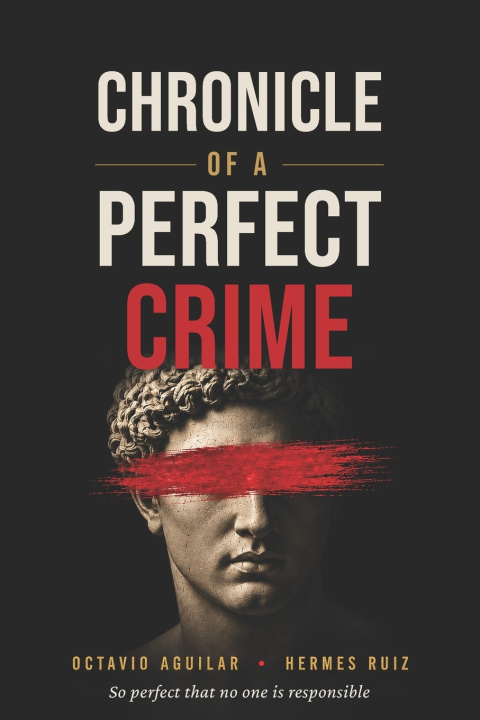
CHRONICLE OF A PERFECT CRIME
 English
 30 b
 Coming soon
 New
Up to 30 days for returns

The perfect crime doesn't leave fingerprints. It leaves meeting minutes, approval workflows, endless email threads, and decisions nobody claims as their own.
We've never had so many tools to make decisions.
It's never been so easy to blame someone else.
The algorithm. The data. The process. Artificial intelligence. Corporate culture. The system.
Eleven people attend a meeting. Nobody owns the decision. Twenty people receive an email. Nobody takes action. An AI system does exactly what it was instructed to do, producing consequences nobody anticipated.
Everyone participated. No one took ownership.
What if the greatest threat to modern organizations isn't making bad decisions, but learning how to make decisions without anyone being accountable for them?
In Chronicle of a Perfect Crime, Octavio Aguilar and Hermes Ruiz investigate a crime hiding in plain sight inside corporations, institutions, and boardrooms: the disappearance of individual accountability behind systems designed to appear perfectly functional.
Structured like a criminal investigation, the book examines how bureaucracy, committees, performance metrics, automated processes, and artificial intelligence can transform human decisions into consequences that seem to belong to no one.
But this is not another book blaming technology.
It is an investigation into the people who design systems, delegate authority without defining its limits, approve recommendations they do not understand, and mistake procedural compliance for genuine accountability.
Two authors. Two perspectives. Disagreements they refuse to hide.
Octavio Aguilar, an accountability expert and creator of the Hazlo Sencillo® methodology, and Hermes Ruiz, an artificial intelligence governance specialist, challenge each other's assumptions while examining real cases and uncomfortable organizational truths.
They don't always agree.
And when they disagree, they don't hand you a convenient answer.
You have to decide.
Written for executives, business leaders, board members, decision-makers, and anyone responsible for the consequences of organizational choices, this book asks a question that becomes increasingly urgent as AI systems gain greater autonomy:
When a decision goes wrong, who can still say, "That decision was mine"?
Because a company can document every procedure, automate every workflow, and approve every recommendation while losing the one thing that makes accountability possible: a human being willing and authorized to own the consequences.
The crime doesn't begin when someone makes a mistake. It begins when nobody can reconstruct who made the decision.
The next decision still belongs to someone.


About the book
English

Give this book today
It's easy
1 Add to cart and choose Deliver as present at the checkout 2 We'll send you a voucher 3 The book will arrive at the recipient's addressHi! I'm Libroamiko, your book advisor.
How can I help you?