
 Contact
 How to shop
Delivery
Shopping guide
 English
 38 b
38 b
 New
New
Up to 30 days for returns

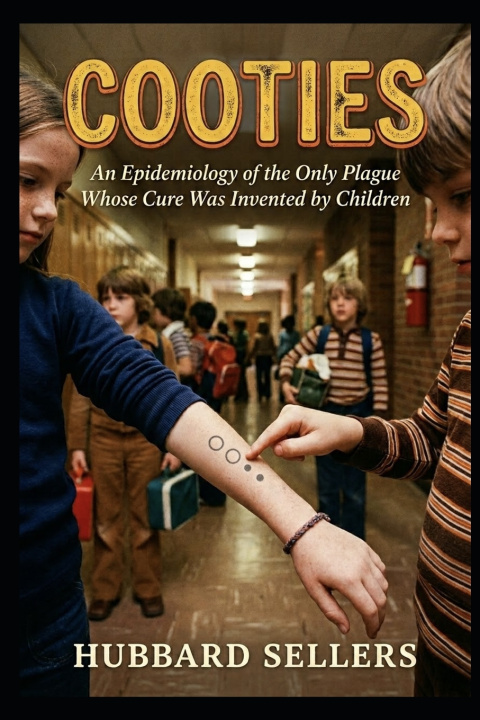
Written by retired county public health officer Hubbard Sellers (referred to as Del in the narrative), Cooties: An Epidemiology of the Only Plague Whose Cure Was Invented by Children analyzes the social phenomenon of playground untouchability using the analytical tools of outbreak investigation. Blending satire, personal memoir, and medical history, the book opens at Cordelia Fentress Elementary School in September 1979, where eight-year-old Del becomes the "index case" of an outbreak after an administrative classmate utters a single word, instantly establishing an "eleven-inch" boundary of isolation. Sellers deconstructs the unique properties of cooties-a zero-day retroactive incubation period, pointing as its primary vector, and a 100% attack rate among believers.
Parallel to his playground experience, Sellers explores real-world histories of quarantine and social exclusion, spanning 14th-century Ragusa, the plague village of Eyam, Ignaz Semmelweis, Typhoid Mary, WWI trench lice, the Salem witch trial "touch test," and the Ryan White AIDS crisis. Ultimately, he demonstrates how adults run the exact same exclusion protocols under bureaucratic terms like "not a good fit". The book highlights how both the childhood "cootie shot" ("circle, circle, dot, dot") and the simple counter-protocol of physically taking an object from an outcast's hand serve as profound gestures of social inclusion.


About the book
English
Categories
