
 Contact
 How to shop
Delivery
Shopping guide
 English
 73 b
73 b
30-day return policy

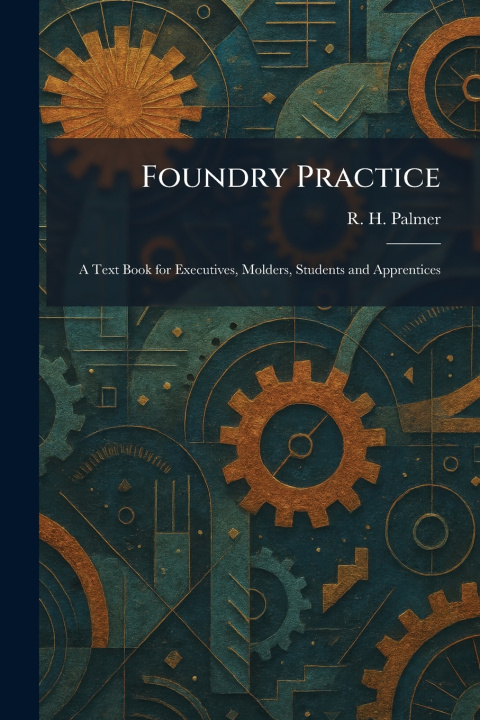
"Foundry Practice" is a comprehensive and authoritative guide to the principles and applications of metal casting and molding. Designed as a foundational text for a broad audience-including foundry executives, skilled molders, students, and apprentices-this work provides an in-depth exploration of the techniques and management strategies essential to the foundry industry.
The text covers a wide range of critical topics, such as the preparation of molding sand, core making, the construction of various types of molds, and the chemical and physical properties of casting materials. R. H. Palmer details the complexities of cupola furnace operation and the nuances of casting different metals, ensuring that both the practical aspects of the craft and the theoretical underpinnings of metallurgy are addressed. By focusing on efficiency and quality in production, the work offers a systematic approach to industrial metalworking.
As a significant contribution to technical literature, "Foundry Practice" serves as an essential resource for understanding the historical development of manufacturing processes. It highlights the evolution of industrial training and the technical standards that shaped the modern engineering landscape, making it a valuable reference for historians of technology, engineers, and metalworking enthusiasts alike.
This work has been selected by scholars as being culturally important, and is part of the knowledge base of civilization as we know it. This work was reproduced from the original artifact, and remains as true to the original work as possible. Therefore, you may see the original copyright references, library stamps (as most of these works have been housed in our most important libraries around the world), and other notations in the work.
This work is in the public domain in the United States of America, and possibly other nations. Within the United States, you may freely copy and distribute this work, as no entity (individual or corporate) has a copyright on the body of the work.
As a reproduction of a historical artifact, this work may contain missing or blurred pages, poor pictures, errant marks, etc. Scholars believe, and we concur, that this work is important enough to be preserved, reproduced, and made generally available to the public. We appreciate your support of the preservation process, and thank you for being an important part of keeping this knowledge alive and relevant.


About the book
English
