
 Contact
 How to shop

Delivery
Shopping guide
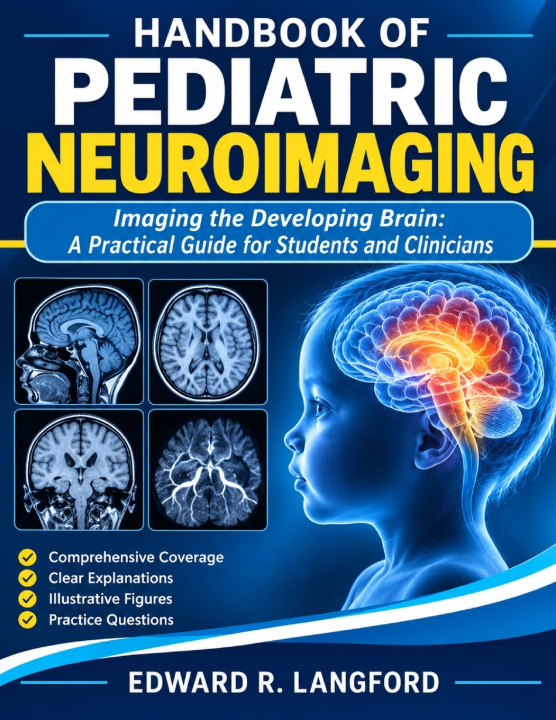
HANDBOOK OF PEDIATRIC NEUROIMAGING
Imaging the Developing Brain: A Practical Guide for Students and Clinicians
 English
 496 b
 Coming soon
 New
Up to 30 days for returns

HANDBOOK OF PEDIATRIC NEUROIMAGING
Imaging the Developing Brain: A Practical Guide for Students and Clinicians
By Edward R. Langford
Understanding the developing brain requires more than recognizing anatomical structures. It requires an appreciation of how the brain changes throughout childhood and how medical imaging helps reveal developmental abnormalities, neurological conditions, and acquired disorders.
Handbook of Pediatric Neuroimaging provides a practical introduction to the principles, techniques, and clinical applications of imaging the pediatric brain and spine. Designed for students and clinicians, this reference explores the role of modern imaging in evaluating neurological conditions in newborns, infants, children, and adolescents.
The book covers essential imaging modalities, normal brain development, myelination patterns, MRI techniques, and important considerations surrounding pediatric imaging safety and sedation. It also examines a broad range of neurological conditions, including congenital and developmental abnormalities, neonatal brain injury, pediatric brain tumors, infections, metabolic disorders, epilepsy-related conditions, and spinal disorders.
Throughout the book, readers are introduced to practical imaging approaches, clinical evaluation strategies, reporting principles, and imaging algorithms that help organize the assessment of common pediatric neurological presentations.
WHAT YOU WILL EXPLORE:Foundations of Pediatric Neuroimaging: Understand the major imaging modalities and their applications in evaluating the developing brain.
Normal Brain Development: Explore developmental anatomy, age-related changes, and patterns of myelination.
MRI Techniques and Imaging Safety: Learn about pediatric MRI protocols, examination considerations, and sedation-related principles.
Congenital and Developmental Disorders: Examine imaging approaches to structural abnormalities and disorders affecting brain development.
Neonatal and Acquired Brain Injury: Explore imaging findings associated with important neonatal and childhood neurological conditions.
Tumors, Infections, and Metabolic Disorders: Understand the role of imaging in evaluating a wide range of pediatric neurological diseases.
Spinal and Epilepsy Imaging: Review imaging considerations for pediatric spinal conditions and epilepsy-related abnormalities.
Clinical Algorithms and Reporting: Develop a structured approach to imaging assessment, interpretation, and reporting.
This handbook is a useful educational resource for:
Medical students seeking a foundation in pediatric neuroimaging.
Radiology residents and trainees developing their imaging knowledge.
Medical practitioners interested in pediatric neurological assessment.
Radiographers and imaging professionals seeking to strengthen their understanding of pediatric imaging.
Clinicians who want a structured reference for reviewing common pediatric brain and spinal imaging topics.
Whether you are building your foundational knowledge or strengthening your understanding of pediatric neurological imaging, this handbook offers an organized pathway through the essential concepts, techniques, and clinical applications.
Explore the developing brain. Understand the imaging. Strengthen your clinical knowledge.


About the book
English

Give this book today
It's easy
1 Add to cart and choose Deliver as present at the checkout 2 We'll send you a voucher 3 The book will arrive at the recipient's addressHi! I'm Libroamiko, your book advisor.
How can I help you?