Free delivery for orders over 69.99 euro.

Become part of a community of book lovers from all over the world and get access to a whole bunch of benefits.
Create an account for free
Free delivery for purchases over 69.99 €
DPD courier 5.99 €
Bpost point 7.99 €
Bpost 7.49 €
DPD point 3.49 €
GLS courier 4.99 €
 Contact
 How to shop
Help
Delivery
DPD courier 5.99 €
Bpost point 7.99 €
Bpost 7.49 €
DPD point 3.49 €
GLS courier 4.99 €
Free delivery for purchases over 69.99 €
Shopping guide
My account
▸
Empty :-(
0
Free delivery for orders over 69.99 euro.
How Boats Float for Kids
Why Ships Stay Up, Buoyancy Science, Engines, Sails, Giant Vessels and the Future of Watercraft
Language
 English
English
Book
Paperback
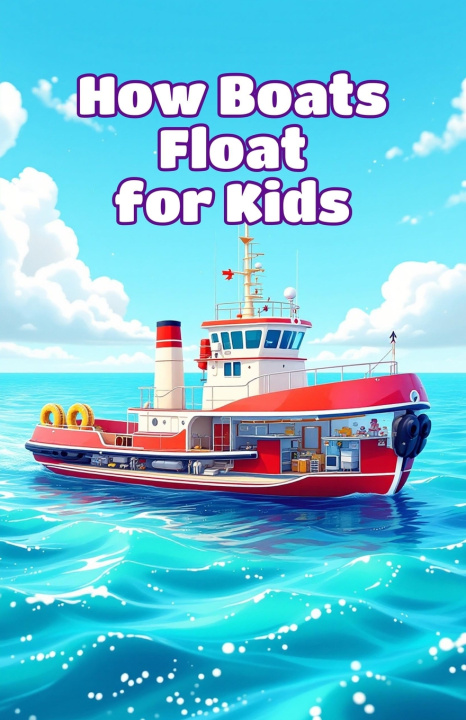
Ever wondered why a massive steel ship floats while a tiny pebble sinks straight to the bottom?This...
Full description
Libristo code: 53476482
?
 32 b
32 b
 New
New
32 b
New
13.01
€
In stock at our supplier
Shipping in 14-21 days
Up to 30 days for returns

Ever wondered why a massive steel ship floats while a tiny pebble sinks straight to the bottom?
This engaging nonfiction reader gives children a clear, confident answer - and then takes them on a fascinating journey through everything that makes boats and ships work.
From the science of buoyancy and displacement to the hulls, sails, and engines that power vessels across oceans, each chapter builds understanding in a way young readers can follow and remember.
Inside, your child will discover:
- What a boat actually is - and what makes something float instead of sink
- How the shape of a hull keeps even the heaviest ships on the water
- The difference between sails and engines, and how each moves a vessel forward
- Dozens of watercraft - from fishing boats and ferries to submarines and cargo ships
- The history of boats and the inventors who changed how people travel
- Essential water safety concepts every young reader should know
- Exciting ideas about the boats of the future, including solar and electric vessels
Who this is for:
Written for early and independent readers aged 4 to 9, this title is ideal for curious children who ask how and why about the world around them. Parents, teachers, and homeschool educators will find it a reliable, focused resource for introducing physical science, engineering concepts, and STEM thinking in an accessible, age-appropriate format. It works equally well as a read-aloud for younger children and an independent read for ages 6 and up.
Whether your child spotted a sailboat at the harbor, studied weather and water in class, or simply loves machines and how they work - this focused guide delivers real science without overwhelming young minds.
Add it to your child's shelf and watch their curiosity set sail.
Actress
&
Polyglot
EWA KASP
for
Play video


Libristo has the largest selection of foreign-language books. That’s why I buy my books there.
About the book
Full name
How Boats Float for Kids
Author
Khasan Laudry
Language
English
English
Binding
Book - Paperback
Date of issue
2026
Number of pages
118
EAN
9783690836005
ISBN
369083600X
Libristo code
53476482
Publishers
Khasan Laudry
Weight
147
Dimensions
140 x 216 x 6

Give this book today
It's easy
1 Add to cart and choose Deliver as present at the checkout 2 We'll send you a voucher 3 The book will arrive at the recipient's address
Book advisor Libroamiko
By using this chat, you are communicating with generative artificial intelligence. By using it, you also agree to the processing of personal data.
Hi! I'm Libroamiko, your book advisor.
How can I help you?
Hi, I'm Libroamiko, can I help?