
 Contact
 How to shop
Delivery
Shopping guide
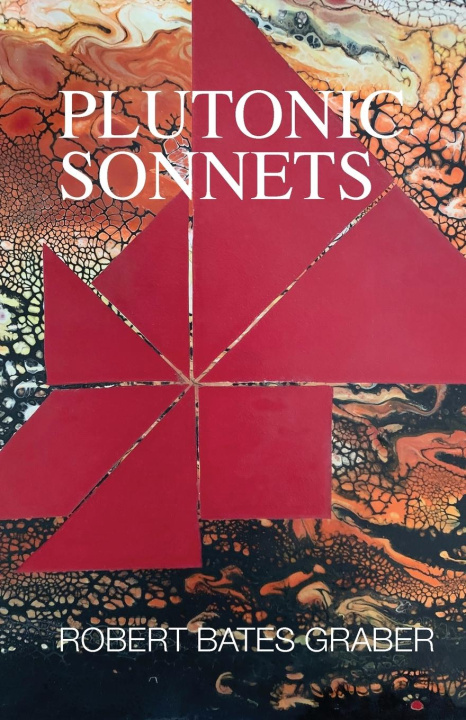
Plutonic Sonnets
 English
 38 b
38 b
Up to 30 days for returns
Customers also purchased








 /
/
 Paperback
 24.88
€
24.88
€
 /
Paperback
44.51
€
/
Paperback
44.51
€


Anthropologist Robert Bates Graber's 165 sonnets constitute a sort of "dig"-- the kind which unearths connections between a volcano spewing hot lava and Pluto, Roman god of the underworld, or the kind a comedian might use to bury a politician--or the kind of digging a scholar does when he's studying the role of rivalries in the development of telescopes, or of sexism in the history of science. After Pluto got plutoed, a friend asked Graber, "Does plutonium still get to be an element?" and Graber found himself digging into new fields full of fertile theories and fascinating people.
As a maker of patterns, Graber enjoys the challenge of using (and occasionally abusing) a highly regarded poetic form, the fourteen-line, 140-syllable, sonnet, with its expected rhythm and rhyme scheme. As a professional seeker, he also maintains a wry awareness of how metaphors work. "Gravity" can apply to planets orbiting stars, inventors orbiting patrons, hungry suitors circling the fathers of potential brides. Gravity can mean stability, or loss of ability to move. "Building" has perhaps an even wider range of analogues: clever rogues build trust; rich men build observatories; astronomers build elegant theories; jealous lovers build traps, and mythic deities build both chaos and wisdom. Puns are part of the plan, too, involving twists of language. Alexander Pope was famously wrong when he called puns "the lowest form of humor." Rather, they're a respite, a detour that reminds readers that words are too bendable to be fully trusted. After all, "stability" contains the word "stab." The god/planet named Uranus stars in both serious and vaguely scatological sonnets in this collection.
There is a learning curve in this collection: readers who know nothing about the history of astronomy or Roman mythology or Europe might want to have their cell phones handy to provide context for, say, how Jupiter (the god, not the planet) handled Callisto (a Roman nymph and one of Jupiter's moons). "Look deeper if things don't add up" says Sonnet LXVI. That said, even without fully understanding how Caroline Herschel "showed that knowing knows no gender" or why Antoine Lavoisier was beheaded, the poems demonstrate humans-and ancient gods-- making decisions, often based on faulty assumptions and with flawed motives. Graber presents great astronomers making patterns, studying the skies, even analyzing the chemical elements making up the "ground beneath our feet." But ... was Galileo heartless when he sent his daughters off to nunneries? (XXVII)
Graber's sonnets are arranged in roughly chronological order around particular scientists and their discoveries, theories, strengths and foibles; but there's a cyclic sensibility at work, too, as theories get scorched and revised, and mythic names tie modern to ancient ways of wondering. This dimension gets its fullest development in XCVI-CXIV, eighteen sonnets presenting a deconstructed-reconstructed version of the "rape" of Proserpina by Pluto, god of the underworld. That story echoes in later poems about more recent astronomers still searching and adjusting data in ways that eventually reduced Pluto's status from god-sized to powerless dwarf. (And who can understand why huge planets sometimes orbit very small stars?)
As the edition published by now-defunct Publish America asked, "If you don't know what a Russian bigamist, a kleptomaniac, buckets of urine, and a place called French Lick have to do with the history of astronomy, this is the book for you! "


About the book
English

Give this book today
It's easy
1 Add to cart and choose Deliver as present at the checkout 2 We'll send you a voucher 3 The book will arrive at the recipient's addressYou might also be interested in


 /
Paperback
56.14
€
/
Paperback
56.14
€



Hi! I'm Libroamiko, your book advisor.
How can I help you?