
 Contact
 How to shop
Delivery
Shopping guide
Seismic Inversion
 English
 208 b
208 b
30-day return policy
Customers also purchased






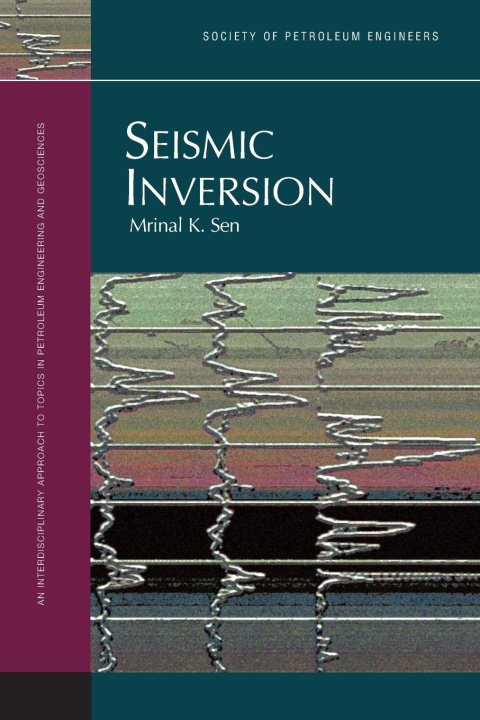
Seismic inversion is now commonly used on post-stack and pre-stack seismic data for estimating rock properties used in reservoir characterization. While seismic migration is aimed at imaging the reflectors or the interfaces at their correct subsurface locations, seismic inversion attempts to estimate elastic and flow properties of the layers bounded by these interfaces. Seismic data are sensitive essentially to seismic wave velocity and density contrasts in the subsurface rocks. Because of significant overlap in elastic properties among different rock types, mapping of these elastic properties to rock types and estimating porosity are not trivial. Thus, seismic inversion is best done by combining data of all types such as seismic, well log, petrophysics, and production history. The results of seismic inversion can be best interpreted by a team of geologists, geophysicists, and reservoir engineers. This book explains the fundamental principles of seismic exploration, seismic wave propagation, and inversion in a language that is understandable by geoscientists and engineers alike so that the team is aware of the significance and limitations of the inversion results.


About the book
English

Give this book today
It's easy
1 Add to cart and choose Deliver as present at the checkout 2 We'll send you a voucher 3 The book will arrive at the recipient's addressYou might also be interested in







 /
/
 Hardback
 103.10
€
103.10
€



Hi! I'm Libroamiko, your book advisor.
How can I help you?