
 Contact
 How to shop
Delivery
Shopping guide
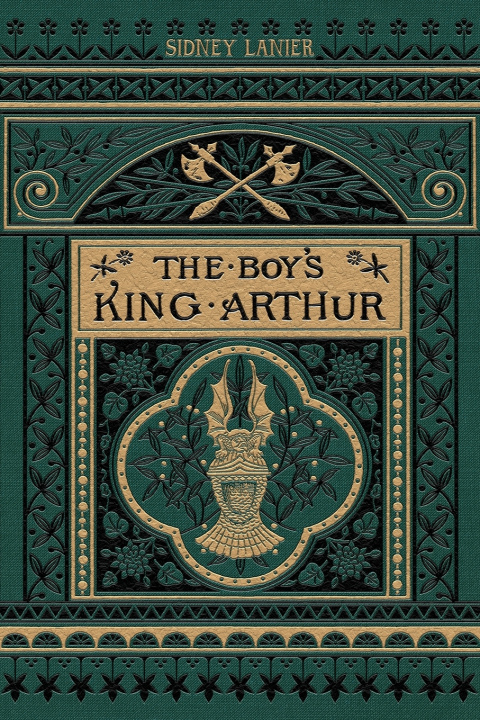
The Boy's King Arthur
Being Sir Thomas Malory's History of King Arthur and his Knights of the Round Table
 English
 40 b
40 b
 Coming soon
 New
New
 Expected 13. 10. 2026
Up to 30 days for returns

It befell in the days of the noble Utherpendragon, when he was King of England, that there was born to him a son who in after time was King Arthur. Howbeit the boy knew not he was the king's son. For when he was but a babe the king commanded two knights and two ladies to take the child bound in rich cloth of gold, "and deliver him to what poor man you meet at the postern gate of the castle." So the child was delivered unto Merlin, and so he bare it forth unto Sir Ector, and made an holy man to christen him, and named him Arthur; and so Sir Ector's wife nourished him. Then within two years King Uther fell sick of a great malady; and thereof he died. Then stood the realm in great danger a long while, for every lord made him strong, and many weened [thought] to have been king. And so, by Merlin's counsel, all the lords of England came together in the greatest church of London on Christmas morn before it was day, to see if God would not show by some miracle who should be king. And when the first mass was done there was seen in the church-yard, against the high altar, a great stone four-square, like to a marble stone, and in the midst thereof was an anvil of steel, a foot of height, and therein stuck a fair sword naked by the point, and letters of gold were written about the sword that said thus: WHO SO PULLET OUT THIS SWORD OF THIS STONE AND ANVIL, IS RIGHTWISE KING BORN OF ENGLAND.
Read the history of King Arthur as it was written in 1470 by Sir Thomas Malory. Arthurian legends predate the Norman Conquest of England in 1066 and were recorded in various books by many scribes, but Malory consolidated them all into one source during the Wars of the Roses, and the resulting book La Morte d'Arthur was printed by the first English printer, William Caxton, in 1485.
This edition of the book preserves Lanier's original 1881 work, namely it includes his lengthy introduction explaining the historical provenance of the text, all 12 original engravings by Alfred Kappes, as well as nearly 100 pages of the story that later printings omitted. The text in this book is Malory's tale from 1470 reprinted word for word. Its spelling was updated by Lanier, who also includes explanations of words that have shifted meaning over the centuries along with modern equivalents.
You might ask whether the English of 1881 can still be considered modern and readable today, but all it takes is Lanier's introduction to show us that English from even 1470 and the 1100s is still readily comprehensible. He reproduces several lines of the Arthurian tales in both Old French and Middle English. The provided "translation" is frequently unnecessary, especially when he quotes Malory writing in the fifteenth century.
As Malory was writing shortly before the creation of the King James Bible, the sentence structure and reading level can be considered much the same.


About the book
English

Give this book today
It's easy
1 Add to cart and choose Deliver as present at the checkout 2 We'll send you a voucher 3 The book will arrive at the recipient's addressHi! I'm Libroamiko, your book advisor.
How can I help you?