
 Contact
 How to shop
Delivery
Shopping guide
 English
 47 b
47 b
 Coming soon
 New
New
Up to 30 days for returns

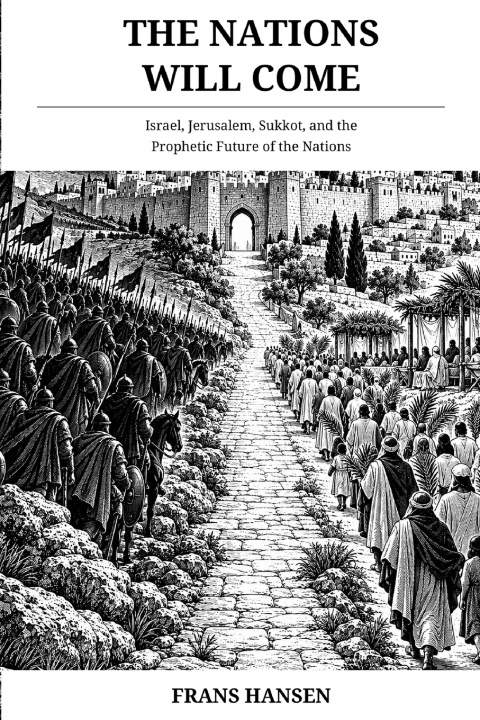
The nations came to Jerusalem as enemies. Zechariah says their survivors will return year after year, this time to worship the God of Israel and celebrate Sukkot.
That reversal raises a question the prophecy does not let us avoid. Sukkot belongs to Israel's covenantal history. Why must people from the nations come for it? Have they become part of Israel, or does their pilgrimage reveal a future for the nations that is more demanding than readers expect?
In The Nations Will Come, Frans Hansen follows that question through the Hebrew Bible and Jewish interpretation. The trail begins with the traditional count of seventy nations in Genesis 10, Jacob's seventy descendants, and the seventy bulls offered during Sukkot. Those seventies are related in Jewish interpretation, but they are different lists. Treating them as one produces an answer the texts never give.
The investigation then turns to the people themselves. Isaiah names Egypt and Assyria in a startling blessing. Kedar, Nebaioth, Midian, and Ephah appear in the movement toward Zion. Solomon prays for the foreigner who comes to God's house. Israel's dispersed are promised a return. Converts, resident outsiders, and people who discover a lost family history raise questions of belonging that a national label alone cannot settle.
Could some future pilgrims be descendants of Israel who had long thought themselves part of the nations? Could others have joined Israel by conversion? What does it mean when a Christian says that Jerusalem feels like home? Hansen takes these possibilities seriously, then asks what evidence each one would require. A feeling of kinship is real, but it cannot establish a genealogy.
The book reads the prophetic passages alongside the Talmud, Rashi, Radak, Rambam, and Rabbi Jonathan Sacks. It distinguishes what a verse says from what later interpretation draws from it. Black-and-white visual guides build a portrait of the crowd as the evidence accumulates, leaving visible the questions the sources do not answer.
At the end, the road to Jerusalem is clearer, even though no ancient text supplies a passenger list. Israel's return matters. The nations' turn toward the God of Israel matters. So does the difference between them. Zechariah's most arresting claim is that survivors of hostile nations will come back to Jerusalem for an Israelite festival, and that their refusal will have consequences.
For readers of the Hebrew Bible, Jewish interpretation, Christian theology, or the Noahide question, The Nations Will Come offers a close investigation of who may be coming to Jerusalem, what the texts establish about them, and where certainty must stop.


About the book
English

Give this book today
It's easy
1 Add to cart and choose Deliver as present at the checkout 2 We'll send you a voucher 3 The book will arrive at the recipient's addressHi! I'm Libroamiko, your book advisor.
How can I help you?