
 Contact
 How to shop
Delivery
Shopping guide
The Wonderful Visit
A Satirical Fantasy of an Angel, Victorian Society, and the Cruelty of Respectability
 English
 58 b
58 b
 Coming soon
 New
New
Up to 30 days for returns

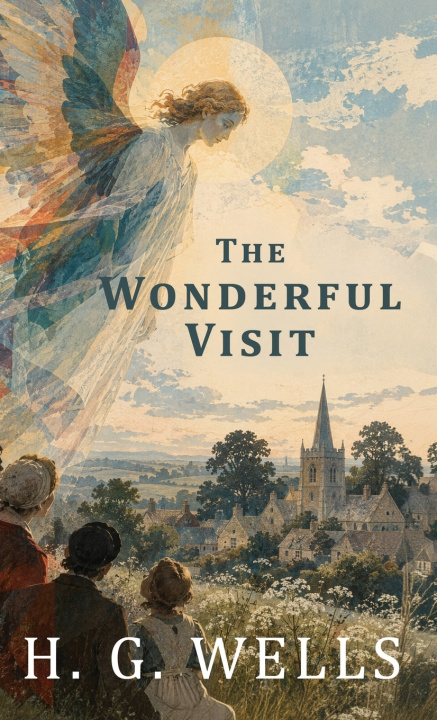
A country vicar sees an unfamiliar winged creature in the sky, mistakes it for a strange bird, and shoots it. What falls to earth is an angel.
Wounded and bewildered, the Angel is taken into the vicar's home, where his presence immediately unsettles the respectable routines of an English village. He does not understand money, property, class distinctions, social conventions, or many of the habits everyone around him treats as natural. His innocence makes ordinary society look increasingly strange.
Wells uses the encounter for comedy, fantasy, and social criticism. The Angel's beauty and openness attract curiosity, suspicion, desire, and hostility. What seems wonderful to the vicar becomes scandalous to neighbors who are more comfortable with rules than with anything that challenges their assumptions.
The contrast between the Angel and the village allows Wells to examine hypocrisy, conformity, materialism, cruelty, and the narrowness of respectability. The fantastic element is never merely decorative; it gives the novel an outsider's perspective on a world whose conventions appear absurd when viewed without prior acceptance.
Published in 1895, the same year as The Time Machine, The Wonderful Visit shows Wells working in a very different speculative mode. Instead of technological invention or future evolution, he uses a supernatural visitor to expose the assumptions governing everyday life in Victorian England.
Light in tone but increasingly melancholy, the novel asks what happens when wonder enters a society determined to classify, judge, and contain it. The Angel's inability to fit comfortably within ordinary categories gives the story both its comedy and its sadness.


About the book
English

Give this book today
It's easy
1 Add to cart and choose Deliver as present at the checkout 2 We'll send you a voucher 3 The book will arrive at the recipient's addressHi! I'm Libroamiko, your book advisor.
How can I help you?