
 Contact
 Comment faire ses achats
Livraison
Guide d'achat
 Anglais
 62 b
62 b
Les clients ont également acheté



 /
/
 Livre de poche
 28.33
€
28.33
€

 /
Livre de poche
35.60
€
/
Livre de poche
35.60
€

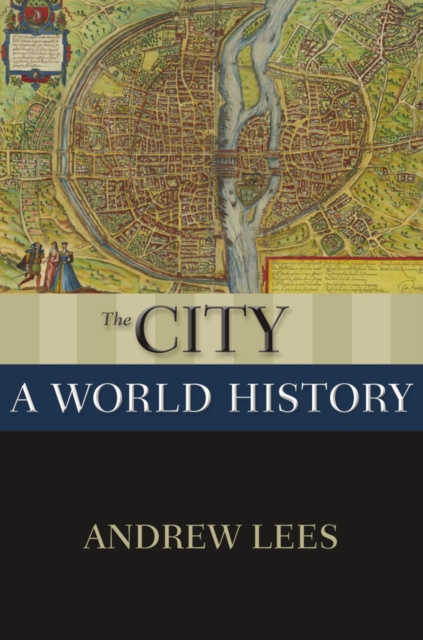
The City: A World History tells the story of the rise and development of urban centers from ancient times to the twenty-first century. It begins with the establishment of the first cities in the Near East in the fourth millennium BCE, and goes on to examine urban growth in the Indus River Valley in India, as well as Egypt and areas that bordered the Mediterranean Sea. Athens, Alexandria, and Rome stand out both politically and culturally. With the fall of the Roman Empire in the West, European cities entered into a long period of waning and deterioration. But elsewhere, great cities-among them, Constantinople, Baghdad, Chang'an, and Tenochtitln-thrived. In the late Middle Ages and the Early Modern period, urban growth resumed in Europe, giving rise to cities like Florence, Paris, and London. This urban growth also accelerated in parts of the world that came under European control, such as Philadelphia in the nascent United States. As the Industrial Revolution swept through in the nineteenth century, cities grew rapidly. Their expansion resulted in a slew of social problems and political disruptions, but it was accompanied by impressive measures designed to improve urban life. Meanwhile, colonial cities bore the imprint of European imperialism. Finally, the book turns to the years since 1914, guided by a few themes: the impact of war and revolution; urban reconstruction after 1945; migration out of many cities in the United States into growing suburbs; and the explosive growth of "e;megacities"e; in the developing world.


À propos du livre
Anglais

Offrez ce livre dès aujourd'hui
C’est simple
1 Ajouter au panier et choisir l'option Livrer comme cadeau à la caisse. 2 Nous vous enverrons un bon d'achat 3 Le livre arrivera à l'adresse du destinataireCeci pourrait également vous intéresser













 /
Livre relié
24.50
€
/
Livre relié
24.50
€





Bonjour ! Je suis Libroamiko, votre conseiller littéraire.
Comment puis-je vous aider ?