
 Contact
 Comment faire ses achats
Livraison
Guide d'achat
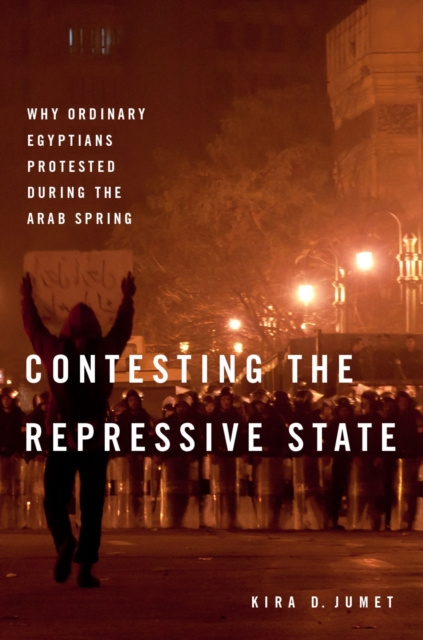
Contesting the Repressive State
Why Ordinary Egyptians Protested During the Arab Spring
 Anglais
 79 b
79 b

For years prior to the Arab Spring, opposition activists in Egypt organized protests with limited success. So why and how did thousands of Egyptian citizens suddenly take to the streets against the Mubarak regime in January 2011? Contesting the Repressive State not only answers this question but asks specifically why and how people who are not part of political movements choose to engage or not engage in anti-government protest under repressive regimes. Kira D. Jumet argues that individuals are rational actors and their decisions to protest or not protest are based on the intersection of three factors: political opportunity structures, mobilizing structures, and framing processes. Based on 170 interviews conducted in Egypt during the Arab Spring, Kira D. Jumet explores how social media, violent government repression, changes in political opportunities, and the military influenced individual decisions to protest or not protest during the 2011 Revolution, Supreme Council of the Armed Forces (SCAF) transitional period, and the June 30, 2013 uprising.


À propos du livre
Anglais

Offrez ce livre dès aujourd'hui
C’est simple
1 Ajouter au panier et choisir l'option Livrer comme cadeau à la caisse. 2 Nous vous enverrons un bon d'achat 3 Le livre arrivera à l'adresse du destinataireBonjour ! Je suis Libroamiko, votre conseiller littéraire.
Comment puis-je vous aider ?