
 Contact
 Comment faire ses achats

Livraison
Guide d'achat
 Anglais
 210 b

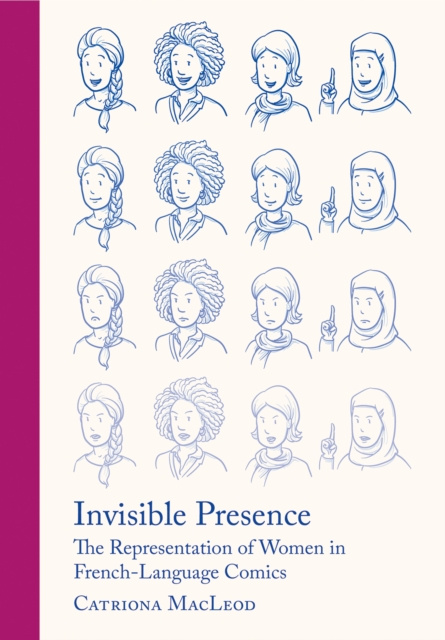
This book looks at the representation of female characters in French comics from their first appearance in 1905. Organised into three sections, the book looks at the representation of women as main characters created by men, as secondary characters created by men, and as characters created by women.It focuses on female characters, both primary and secondary, in the francophone comic or bande dessine, as well as the work of female bande dessine creators more generally. Until now these characters and creators have received relatively little scholarly attention; this new book is set to change this status quo.Using feminist scholarship, especially from well-known film and literary theorists, thebook asks what it means to draw women from within a phallocentric, male-dominated paradigm, as well as how the particular medium of bande dessine, its form as well as its history, has shaped dominant representations of women.This is the first book to study the representation of women in the French-language drawn strip. There are no other works with this specific focus, either on women in Franco-Belgian comics, or on the drawn representation of women by men. This is avery useful addition to both general discussions of French-language comics, and todiscussions of women's comics, which are focused on comics by women only.As it is written in English, and due to the popularity of comic art in Britain and the United States, this book will primarily appeal to an Anglo-American market. However, the cultural and gender studies approach this text employs (theoretical frameworks still notwidely seen in non-Anglophone studies of the bande dessine)will ensure that the text is also of interest to a Franco-Belgian audience.This book will appeal both to an academic and to a more general readership with aninterest in popular comic art.It will be useful to academics, researchers and students (undergraduates and postgraduates) in comic art, art history, contemporary art, French studies, gender studies, feminist studies and media studies. Excellent potential for inclusion on reading lists.With a focus on an art-form which also inspires a lot of public (non-academic) enthusiasm, it will also appeal to fans of the bande dessine (or wider comic art medium) who are interested in the representation of women in comic art, and to comics scholars on a broad scale.


À propos du livre
Anglais

Offrez ce livre dès aujourd'hui
C’est simple
1 Ajouter au panier et choisir l'option Livrer comme cadeau à la caisse. 2 Nous vous enverrons un bon d'achat 3 Le livre arrivera à l'adresse du destinataireBonjour ! Je suis Libroamiko, votre conseiller littéraire.
Comment puis-je vous aider ?