
 Contact
 Comment faire ses achats

Livraison
Guide d'achat
 Anglais
 89 b
Les clients ont également acheté


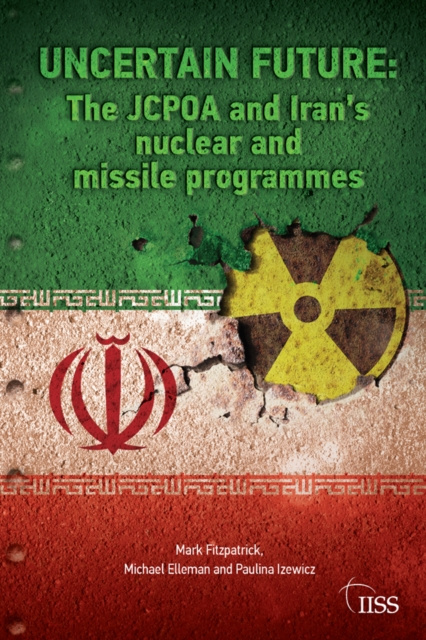
In July 2015, eight parties - France, Germany and the United Kingdom, together with the European Union and China, Russia and the United States on the one side, and Iran on the other - adopted the Joint Comprehensive Plan of Action (JCPOA), better known as the Iran nuclear deal. Under the agreement, Iran accepted limits to its nuclear programme in return for sanctions relief. Hailed by some as a diplomatic achievement, detractors - both in the US and the Middle East - saw the deal as overly lenient. In May 2018, US President Donald Trump announced that the US would cease waiving sanctions and withdraw from the agreement.This Adelphi book assesses that Trump's decision was a grave error. Like any multilateral agreement, the deal was not perfect, but Iran had been honouring its commitments. Drawing on a deep understanding of the non-proliferation regime and technical expertise, the authors trace the emergence of antipathy to the JCPOA and set out how many of the politicised criticisms of the accord are demonstrably incorrect. They argue that the little-known Procurement Channel - established by the JCPOA to give Iran a legitimate route to procure goods and services for its now-limited nuclear programme - has been an effective check on Iran's illicit procurement of nuclear-related goods. Moreover, this book demonstrates that Iran's nuclear and ballistic-missile programmes are not intrinsically linked, as not all Iranian missiles are designed to be nuclear-capable. While the deal endures for now, its survival will ultimately depend on Iran.


À propos du livre
Anglais

Offrez ce livre dès aujourd'hui
C’est simple
1 Ajouter au panier et choisir l'option Livrer comme cadeau à la caisse. 2 Nous vous enverrons un bon d'achat 3 Le livre arrivera à l'adresse du destinataireCeci pourrait également vous intéresser



Bonjour ! Je suis Libroamiko, votre conseiller littéraire.
Comment puis-je vous aider ?