
 Contact
 Comment faire ses achats
Livraison
Guide d'achat
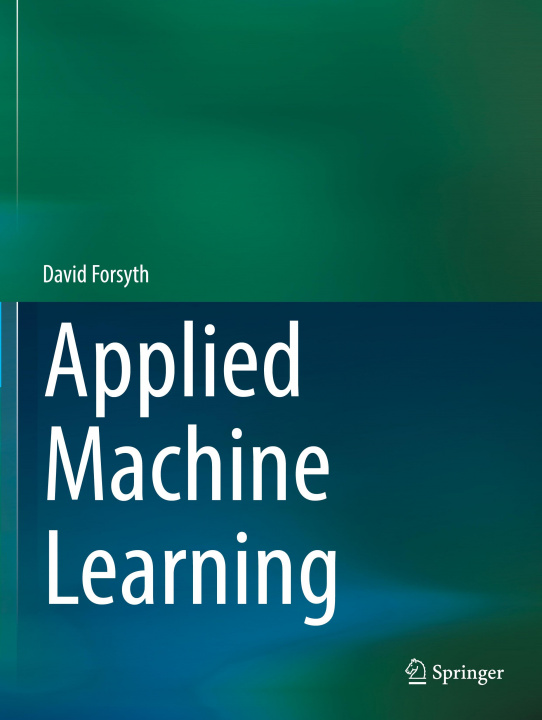
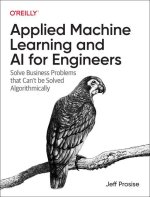
Applied Machine Learning
 Anglais
 207 b
207 b
Politique de retour sous 30 jours
Les clients ont également acheté

 /
/
 Livre de poche
 16.80
€
16.80
€



 /
Livre de poche
41.91
€
/
Livre de poche
41.91
€


 /
Livre de poche
14.57
€
/
Livre de poche
14.57
€






 /
Livre relié
52.04
€
/
Livre relié
52.04
€

 /
Livre de poche
15.79
€
/
Livre de poche
15.79
€



Machine learning methods are now an important tool for scientists, researchers, engineers and students in a wide range of areas. This book is written for people who want to adopt and use the main tools of machine learning, but aren't necessarily going to want to be machine learning researchers. Intended for students in final year undergraduate or first year graduate computer science programs in machine learning, this textbook is a machine learning toolkit. Applied Machine Learning covers many topics for people who want to use machine learning processes to get things done, with a strong emphasis on using existing tools and packages, rather than writing one's own code.A companion to the author's Probability and Statistics for Computer Science, this book picks up where the earlier book left off (but also supplies a summary of probability that the reader can use). Emphasizing the usefulness of standard machinery from applied statistics, this textbook gives an overview of the major applied areas in learning, including coverage of:- classification using standard machinery (naive bayes; nearest neighbor; SVM)- clustering and vector quantization (largely as in PSCS)- PCA (largely as in PSCS)- variants of PCA (NIPALS; latent semantic analysis; canonical correlation analysis)- linear regression (largely as in PSCS)- generalized linear models including logistic regression- model selection with Lasso, elasticnet- robustness and m-estimators- Markov chains and HMM's (largely as in PSCS)- EM in fairly gory detail; long experience teaching this suggests one detailed example is required, which students hate; but once they've been through that, the next one is easy- simple graphical models (in the variational inference section)- classification with neural networks, with a particular emphasis onimage classification- autoencoding with neural networks- structure learning


À propos du livre
Anglais

Offrez ce livre dès aujourd'hui
C’est simple
1 Ajouter au panier et choisir l'option Livrer comme cadeau à la caisse. 2 Nous vous enverrons un bon d'achat 3 Le livre arrivera à l'adresse du destinataireCeci pourrait également vous intéresser
 /
Livre relié
110.87
€
/
Livre relié
110.87
€


 /
Livre de poche
10.32
€
/
Livre de poche
10.32
€
 /
Livre de poche
8.60
€
/
Livre de poche
8.60
€


 /
Livre de poche
7.48
€
/
Livre de poche
7.48
€







Bonjour ! Je suis Libroamiko, votre conseiller littéraire.
Comment puis-je vous aider ?