
 Contact
 Comment faire ses achats
Livraison
Guide d'achat
Arbitrary Rule
 Anglais
 266 b
266 b
 Bientôt
 Date inconnue
Jusqu'à 30 jours pour les retours
Les clients ont également acheté







 /
/
 Livre de poche
 16.18
€
16.18
€









 /
Livre de poche
22.05
€
/
Livre de poche
22.05
€
 /
Livre de poche
13.35
€
/
Livre de poche
13.35
€

 /
Livre de poche
33.48
€
/
Livre de poche
33.48
€




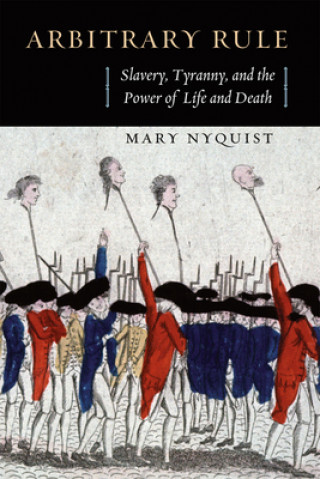
Slavery appears as a figurative construct in countless cultural and historical contexts, especially during the English revolution of the mid-seventeenth century, and again in the American and French revolutions, when radical pamphleteers and theorists repeatedly represented their treatment as a form of political slavery. What, if anything, does this figurative, political slavery have to do with transatlantic slavery? In "Arbitrary Rule", Mary Nyquist explores connections between political and chattel slavery by excavating the tradition of Western political thought that justifies actively opposing tyranny. Political slavery, whether civil or national, Nyquist shows, is frequently paired with its antagonist, political tyranny. "Arbitrary Rule" is the first book to tackle political slavery's discursive complexity, engaging Eurocolonialism, political philosophy, and literary studies, areas of study too often kept apart. She argues that "antityranny discourse" provided members of a "free" community with a means of protesting a threatened reduction of privileges, or of consolidating a collective, political identity. Its semantic complexity, however, also enabled it to legitimize racialized enslavement and imperial expansion. Throughout, Nyquist demonstrates how principles relating to political slavery and tyranny are bound up with a Roman jurisprudential doctrine that sanctions the power of life and death held by the slaveholder over slaves and, by extension, the state over its citizenry.


À propos du livre
Anglais

Offrez ce livre dès aujourd'hui
C’est simple
1 Ajouter au panier et choisir l'option Livrer comme cadeau à la caisse. 2 Nous vous enverrons un bon d'achat 3 Le livre arrivera à l'adresse du destinataireCeci pourrait également vous intéresser






 /
Livre relié
46.94
€
/
Livre relié
46.94
€

















Bonjour ! Je suis Libroamiko, votre conseiller littéraire.
Comment puis-je vous aider ?