
 Contact
 Comment faire ses achats
Livraison
Guide d'achat
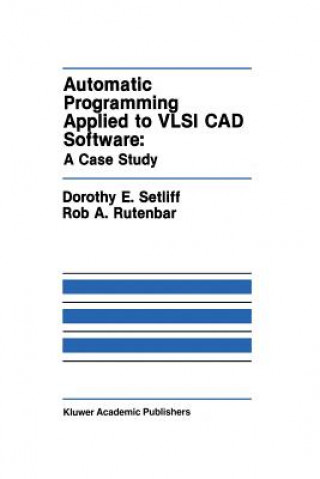
Automatic Programming Applied to VLSI CAD Software: A Case Study
 Anglais
 430 b
430 b
Jusqu'à 30 jours pour les retours
Les clients ont également acheté











 /
/
 Livre de poche
 30.05
€
30.05
€




 /
Livre de poche
16.98
€
/
Livre de poche
16.98
€

This book, and the research it describes, resulted from a simple observation we made sometime in 1986. Put simply, we noticed that many VLSI design tools looked "alike". That is, at least at the overall software architecture level, the algorithms and data structures required to solve problem X looked much like those required to solve problem X'. Unfortunately, this resemblance is often of little help in actually writing the software for problem X' given the software for problem X. In the VLSI CAD world, technology changes rapidly enough that design software must continually strive to keep up. And of course, VLSI design software, and engineering design software in general, is often exquisitely sensitive to some aspects of the domain (technology) in which it operates. Modest changes in functionality have an unfortunate tendency to require substantial (and time-consuming) internal software modifications. Now, observing that large engineering software systems are technology dependent is not particularly clever. However, we believe that our approach to xiv Preface dealing with this problem took an interesting new direction. We chose to investigate the extent to which automatic programming ideas cold be used to synthesize such software systems from high-level specifications. This book is one of the results of that effort.


À propos du livre
Anglais
Catégories

Offrez ce livre dès aujourd'hui
C’est simple
1 Ajouter au panier et choisir l'option Livrer comme cadeau à la caisse. 2 Nous vous enverrons un bon d'achat 3 Le livre arrivera à l'adresse du destinataireCeci pourrait également vous intéresser

 /
Livre de poche
153.40
€
/
Livre de poche
153.40
€

 /
Livre de poche
19.39
€
/
Livre de poche
19.39
€











 /
Livre de poche
18.29
€
/
Livre de poche
18.29
€







 /
Livre de poche
18.29
€
/
Livre de poche
18.29
€

 /
Livre de poche
26.63
€
/
Livre de poche
26.63
€
Bonjour ! Je suis Libroamiko, votre conseiller littéraire.
Comment puis-je vous aider ?