
 Contact
 Comment faire ses achats
Livraison
Guide d'achat
 Anglais
 188 b
188 b
Jusqu'à 30 jours pour les retours
Les clients ont également acheté
 /
/
 Livre de poche
 19.30
€
19.30
€







 /
Livre relié
4.99
€
/
Livre relié
4.99
€

 /
Livre de poche
35.80
€
/
Livre de poche
35.80
€



 /
/
 Cartes géographiques
6.59
€
Cartes géographiques
6.59
€


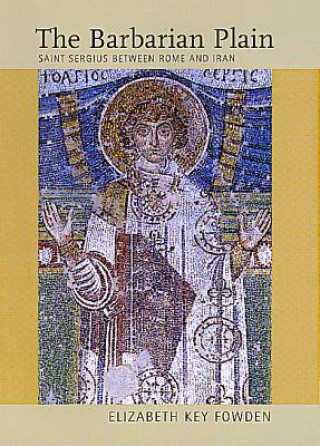
During the fifth and sixth centuries A.D. there arose on the Euphrates frontier, between the empires of Rome and Iran, a city girded with glittering gypsum walls. Within these walls stood a great church, a shrine for the relics of Saint Sergius, who was martyred there, at Rusafa, in the early fourth century. Around Rusafa stretched the 'Barbarian Plain,' inhabited by Rome's Arab allies, many of whom revered the saint. Elizabeth Key Fowden examines the rise of the cult of Sergius in late antiquity, drawing on literary accounts, inscriptions, archaeology, images, and the landscape itself to construct a many-faceted picture of the role of religion in this frontier society. Focusing on the socio-cultural as well as the political dimensions of the Sergius cult, her study sheds light on the lives of the ordinary faithful, as well as on religion's place in the strategic calculations of hostile empires. Beginning with a detailed analysis of the surviving accounts of the martyrdom of Sergius, Fowden provides a discussion of Syrian Rusafa-Sergiopolis, traces the spread of the Sergius cult in Syria and Mesopotamia, and provides a provocative interpretation of the relation between the saint's presence at Rusafa and his role in frontier defense. She also discusses Arab Christianity in the context of late Roman culture in the East, as well as the continuation of the Sergius tradition after the Muslim conquest, emphasizing the changes and continuities brought by the rise of Islam.


À propos du livre
Anglais
Catégories

Offrez ce livre dès aujourd'hui
C’est simple
1 Ajouter au panier et choisir l'option Livrer comme cadeau à la caisse. 2 Nous vous enverrons un bon d'achat 3 Le livre arrivera à l'adresse du destinataireCeci pourrait également vous intéresser




 /
Livre relié
131.34
€
/
Livre relié
131.34
€








 /
Livre de poche
14.70
€
/
Livre de poche
14.70
€


 /
Livre de poche
32.50
€
/
Livre de poche
32.50
€
 /
Livre de poche
23.80
€
/
Livre de poche
23.80
€






Bonjour ! Je suis Libroamiko, votre conseiller littéraire.
Comment puis-je vous aider ?