
 Contact
 Comment faire ses achats
Livraison
Guide d'achat
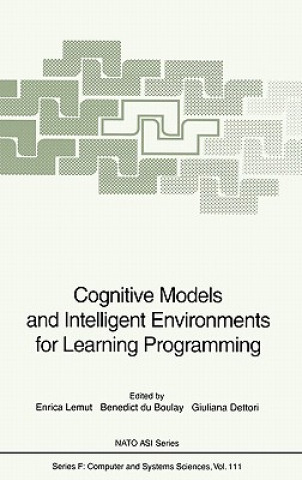
Cognitive Models and Intelligent Environments for Learning Programming
 Anglais
 373 b
373 b
Jusqu'à 30 jours pour les retours
Les clients ont également acheté










 /
/
 Livre de poche
 71.00
€
71.00
€






 /
Livre de poche
44.23
€
/
Livre de poche
44.23
€


 /
Livre de poche
47.16
€
/
Livre de poche
47.16
€




 /
Livre de poche
49.89
€
/
Livre de poche
49.89
€
 /
Livre de poche
43.73
€
/
Livre de poche
43.73
€




At present, there is a general consensus on the nature of learning programming, but there are different opinions onwhat forms an effective environment for it. It is generally recognized that the development of a mental model is a formidable task for the student and that learning programming is a complex activity that depends heavily on metacognitive skills. This book, based on a NATO workshop, presents both pure cognitive models and experimental learning environments, and discusses what characteristics can make a learning model effective, especially in relation to the learning environment (natural or computerized). The papers cover cognitive models related to different aspects of programming, classes of learners, and types of environment, and are organized in three groups: theoretical and empirical studies on understanding programming, environments for learning programming, and learning programming in school environments. Comprehension, design, construction, testing, debugging, and verification are recognized as interdependent skills, which require complicated analysis and may develop independently, and indifferent orders, in novices. This book shows that there is unlikely to be a single path from novice to expertand that the structure of the final product (the program)may not constrain the process by which it comes into beingas much as some would advocate.


À propos du livre
Anglais

Offrez ce livre dès aujourd'hui
C’est simple
1 Ajouter au panier et choisir l'option Livrer comme cadeau à la caisse. 2 Nous vous enverrons un bon d'achat 3 Le livre arrivera à l'adresse du destinataireCeci pourrait également vous intéresser















 /
Livre de poche
17.46
€
/
Livre de poche
17.46
€
 /
Livre de poche
22.92
€
/
Livre de poche
22.92
€



 /
Livre relié
146.35
€
/
Livre relié
146.35
€



Bonjour ! Je suis Libroamiko, votre conseiller littéraire.
Comment puis-je vous aider ?