Contact
 Comment faire ses achats
Livraison
Guide d'achat
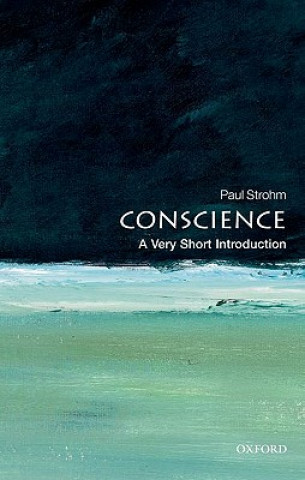
Conscience: A Very Short Introduction
 Anglais
 26 b
26 b
Jusqu'à 30 jours pour les retours
Les clients ont également acheté















 /
/
 Livre de poche
 66.12
€
66.12
€



Where does our conscience come from? How reliable is it? In the West conscience has been relied upon for two thousand years as a judgement that distinguishes right from wrong. It has effortlessly moved through every period division and timeline between the ancient, medieval, and modern. The Romans identified it, the early Christians appropriated it, and Reformation Protestants and loyal Catholics relied upon its advice and admonition. Today it is embraced with equal conviction by non-religious and religious alike. Considering its deep historical roots and exploring what it has meant to successive generations, Paul Strohm highlights why this particularly European concept deserves its reputation as 'one of the prouder Western contributions to human rights and human dignity throughout the world.' Using examples from popular culture including the Disney classic Pinocchio, as well as examples from contemporary politics, he explores the work of thinkers such as Nietzsche, Freud, and Aquinas, to show how and why conscience remains a motivating and important principle in the contemporary world. ABOUT THE SERIES: The Very Short Introductions series from Oxford University Press contains hundreds of titles in almost every subject area. These pocket-sized books are the perfect way to get ahead in a new subject quickly. Our expert authors combine facts, analysis, perspective, new ideas, and enthusiasm to make interesting and challenging topics highly readable.


À propos du livre
Anglais

Offrez ce livre dès aujourd'hui
C’est simple
1 Ajouter au panier et choisir l'option Livrer comme cadeau à la caisse. 2 Nous vous enverrons un bon d'achat 3 Le livre arrivera à l'adresse du destinataireCeci pourrait également vous intéresser







 /
Livre de poche
27.92
€
/
Livre de poche
27.92
€

 /
Livre de poche
20.81
€
/
Livre de poche
20.81
€


 /
Livre de poche
32.70
€
/
Livre de poche
32.70
€