
 Contact
 Comment faire ses achats

Livraison
Guide d'achat
 Anglais
 300 b
Jusqu'à 30 jours pour les retours
Les clients ont également acheté








 /
 Livre de poche
 28.32
€


 /
Livre de poche
12.25
€

 /
Livre de poche
33.85
€


 /
 Partitions
24.00
€
 /
Livre de poche
12.95
€



 /
Livre de poche
30.33
€



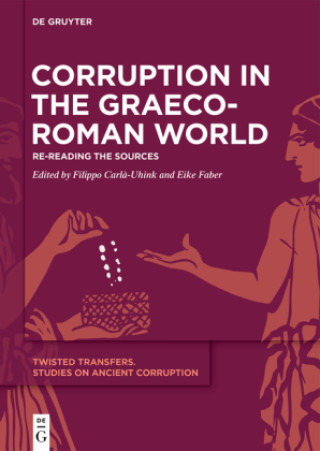
Defining corruption is an incredibly difficult task. Being at the same time a concept identifying illegitimate and illegal behaviors, mostly connected to positions of power, and a word indicating a process of (moral) degeneration, corruption is hard to tackle and disentangle - especially when one considers how it is perceived and discussed in public discourse. As deviance from the norm, corruption shifts continuously: different cultures recognize different kinds of behavior as "corrupt". Nonetheless, earlier studies on corruption in Greek and Roman antiquity have often tried to define which periods were "more" or "less corrupt", or how corruption influenced the demise of political orders (for example in the late Roman republic or in late antiquity). This volume develops a different approach, focusing on the ways in which ancient sources - literary texts, papyri, laws, etc. - have understood and defined corruption, to gain an emic perspective of corruption in different moments and contexts of Greco-Roman Antiquity. The volume thus provides an innovative and comprehensive perspective on corruption and anti-corruption in Greek and Roman antiquity, thus providing relevant tools also for today's discussions about a topic which is and was always current.


À propos du livre
Anglais

Offrez ce livre dès aujourd'hui
C’est simple
1 Ajouter au panier et choisir l'option Livrer comme cadeau à la caisse. 2 Nous vous enverrons un bon d'achat 3 Le livre arrivera à l'adresse du destinataireCeci pourrait également vous intéresser



 /
Livre de poche
24.20
€

 /
Livre de poche
31.24
€

 /
Livre de poche
12.35
€

 /
Livre relié
33.25
€

 /
Livre de poche
32.24
€
 /
Livre de poche
12.35
€






 /
Livre de poche
21.69
€



Bonjour ! Je suis Libroamiko, votre conseiller littéraire.
Comment puis-je vous aider ?