
 Contact
 Comment faire ses achats
Livraison
Guide d'achat
 Anglais
 69 b
69 b
Jusqu'à 30 jours pour les retours
Les clients ont également acheté

 /
/
 Livre de poche
 27.84
€
27.84
€











 /
Livre relié
114.12
€
/
Livre relié
114.12
€








 /
Livre de poche
52.97
€
/
Livre de poche
52.97
€









 /
Livre de poche
22.29
€
/
Livre de poche
22.29
€

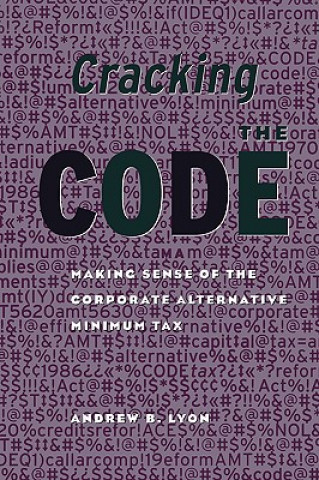
The corporate alternative minimum tax (AMT) was hailed in the Tax Reform Act of 1986 as instrumental to ensuring that tax loopholes would not permit corporations to avoid paying their fair share of tax liability. In 1995, less than ten years later, repeal of the AMT was pledged as part of the Republican Party's " Contract with America" and passed by the House of Representatives. Opponents of the AMT object that it penalizes new investment by firms and prevents the use of legitimate deductions. Its defenders tout the ability of the AMT to address public perceptions of unfairness in the tax system. At first glance, the debate over the AMT seems to be another example of the classic struggle between equity and efficiency. But, as this book reveals, there are serious flaws in the arguments used on both sides of this issue. As a result, the AMT may fail to achieve any notable equity objectives and may miss the opportunity to make significant improvements in the efficiency with which the nation's scarce capital is employed. Whether or not reforms of the AMT are ultimately enacted, the debate over the AMT raises fundamental questions of tax policy that will persist: Who benefits from tax subsidies? How much should the tax code be used to direct resources in the economy? If corporate taxes are ultimately borne by individuals, how do corporate tax provisions affect fairness? Andrew Lyon opens these topics up to a wide audience, presenting new data on the impact of the AMT, and offering suggestions for future policy reform. He argues that the legislative desire to respond to an apparent inequity should be channeled into considering whether there are efficiency reasons for reducing the taxadvantages observed. The best solutions to these considerations, he contends, are not found in a minimum tax.


À propos du livre
Anglais
Catégories

Offrez ce livre dès aujourd'hui
C’est simple
1 Ajouter au panier et choisir l'option Livrer comme cadeau à la caisse. 2 Nous vous enverrons un bon d'achat 3 Le livre arrivera à l'adresse du destinataireCeci pourrait également vous intéresser









 /
Livre de poche
30.67
€
/
Livre de poche
30.67
€


 /
Livre de poche
10.28
€
/
Livre de poche
10.28
€
 /
Livre de poche
24.21
€
/
Livre de poche
24.21
€
 /
Livre de poche
19.97
€
/
Livre de poche
19.97
€



 /
Livre relié
21.18
€
/
Livre relié
21.18
€


Bonjour ! Je suis Libroamiko, votre conseiller littéraire.
Comment puis-je vous aider ?