
 Contact
 Comment faire ses achats

Livraison
Guide d'achat
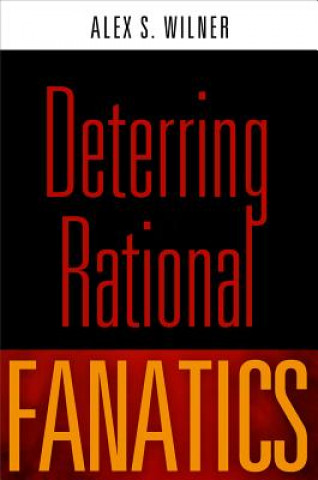
Deterring Rational Fanatics
 Anglais
 238 b
Jusqu'à 30 jours pour les retours
Les clients ont également acheté











 /
 Livre de poche
 77.94
€

 /
Livre de poche
20.71
€


Cold War-era strategic thinking was driven by the belief that individuals, organizations, and foreign states could be deterred from offensive action by the threat of reprisal. That assurance was shaken with the terrorist attacks of September 11, 2001; suddenly, it seemed that no threat was powerful enough to deter individuals or organizations that valued their political objectives over their own lives and the lives of their members. More than a decade later, new research and theory are bringing deterrence back into currency as a viable counterterrorism strategy. Alex S. Wilner updates deterrence theory for conflict in the twenty-first century, arguing for its value against challengers such as rogue states, cyber warriors, and transnational terrorist organizations. Deterring Rational Fanatics provides a full-scale discussion of deterrence theory concepts and controversies, assessing the utility of relying on the logic of deterrence and coercion to counter contemporary terrorism. In particular, targeted killings directed against the Taliban of Afghanistan provide a vivid illustration of the impact deterrence can have on militant behavior: precision strikes that eliminate militant leaders represent a significant cost to planning and participating in political violence, a cost that can coerce, manipulate, and alter behavior. Though deterrence theory is not a panacea for terrorism, insurgency, or militancy, it can serve as a strategic guide for state responses; as Wilner shows, terrorist violence can indeed be deterred.


À propos du livre
Anglais

Offrez ce livre dès aujourd'hui
C’est simple
1 Ajouter au panier et choisir l'option Livrer comme cadeau à la caisse. 2 Nous vous enverrons un bon d'achat 3 Le livre arrivera à l'adresse du destinataireCeci pourrait également vous intéresser
 /
Livre relié
153.47
€




 /
Livre relié
46.76
€





 /
Livre de poche
15.08
€












Bonjour ! Je suis Libroamiko, votre conseiller littéraire.
Comment puis-je vous aider ?