
 Contact
 Comment faire ses achats
Livraison
Guide d'achat
Embryos under the Microscope
 Anglais
 119 b
119 b
Jusqu'à 30 jours pour les retours
Les clients ont également acheté










 /
/
 Livre de poche
 22.99
€
22.99
€







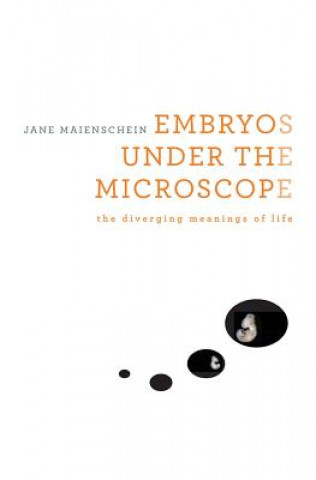
Too tiny to see with the naked eye, the human embryo was just a hypothesis until the microscope made observation of embryonic development possible. This changed forever our view of the minuscule cluster of cells that looms large in questions about the meaning of life. Embryos under the Microscope examines how our scientific understanding of the embryo has evolved from the earliest speculations of natural philosophers to today's biological engineering, with its many prospects for life-enhancing therapies. Jane Maienschein shows that research on embryos has always revealed possibilities that appear promising to some but deeply frightening to others, and she makes a persuasive case that public understanding must be informed by up-to-date scientific findings. Direct observation of embryos greatly expanded knowledge but also led to disagreements over what investigators were seeing. Biologists confirmed that embryos are living organisms undergoing rapid change and are not in any sense functioning persons. They do not feel pain or have any capacity to think until very late stages of fetal development. New information about DNA led to discoveries about embryonic regulation of genetic inheritance, as well as evolutionary relationships among species. Scientists have learned how to manipulate embryos in the lab, taking them apart, reconstructing them, and even synthesizing--practically from scratch--cells, body parts, and maybe someday entire embryos. Showing how we have learned what we now know about the biology of embryos, Maienschein changes our view of what it means to be alive.


À propos du livre
Anglais

Offrez ce livre dès aujourd'hui
C’est simple
1 Ajouter au panier et choisir l'option Livrer comme cadeau à la caisse. 2 Nous vous enverrons un bon d'achat 3 Le livre arrivera à l'adresse du destinataireCeci pourrait également vous intéresser



 /
Livre de poche
22.08
€
/
Livre de poche
22.08
€















Bonjour ! Je suis Libroamiko, votre conseiller littéraire.
Comment puis-je vous aider ?