
 Contact
 Comment faire ses achats
Livraison
Guide d'achat
Excursion a Los Indios Ranqueles
 Espagnol
 86 b
86 b
Jusqu'à 30 jours pour les retours
Les clients ont également acheté





 /
/
 Livre de poche
 35.68
€
35.68
€


 /
Livre de poche
51.65
€
/
Livre de poche
51.65
€




 /
Livre de poche
24.05
€
/
Livre de poche
24.05
€


















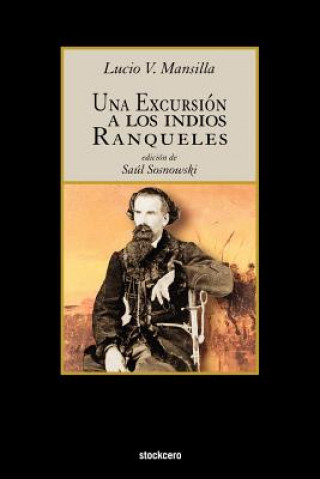
This Argentine literary classic, one of the most subtle and perceptive commentaries ever written about life on the frontier, appeared in print initially in serial form. Later published as a book, Una excursión a los indios ranqueles constitutes one of the few literary works that presents a vivid and testimonial account of a peaceful encounter between the native inhabitants of the South and those who consider themselves to be representatives of European civilization and of the Argentina of the future. Esteemed for its humor and narrative originality, Lucio V. Mansilla's Una excursión a los indios ranqueles is comparable to Sarmiento's Facundo and the two complement each other. Mansilla's book offers penetrating observations about the fundamental aspects of the confrontation between "civilization and barbarism," as well as about immigration, racial and ethnic diversity, private property ownership and land tenure. Juan Manuel de Rosas had dominated a large part of the country between 1829 and 1852 and despite having led successful expeditions against the indigenous frontier populations, the situation of the "Indian question" after his fall from power was a problematic one. In 1869, after a peace treaty was signed, Mansilla was sent to the tense frontier zone on a fact-finding mission. Colonel Mansilla, an experienced and cultured aristocrat, as well as a nephew of Rosas' (which he wrote "Rozas), was an exception in his era for his advocacy of an open dialogue as the best solution for the "Indian problem." Eventually the peaceful treaty he sought with the Ranqueles was rejected by the government, which gradually established policies of ethnic cleansing and land expropriation Mansilla, with subtle humor, titled his expedition an "excursion," elegantly minimizing the dangers it entailed and avoiding any allusion to his disobedience to orders. During the trip Mansilla wrote a series of letters to a friend which were later published in La Tribuna of Buenos Aires. His detailed observations offer, besides a sharp-eyed and amusing commentary, quantities of ethnographic information, particularly valuable since shortly after that the majority of indigenous people in the south of Argentina were exterminated or assimilated. This book, as well as his participation in political and social events, established Lucio V. Mansilla as one of the dominating figures of the "Generation of 1880," which is so important in the literary and intellectual development of modern Argentina. This edition, by Saul Sosnowski, is an updated version of the text published by Biblioteca Ayacucho in 1984, to which he has added many very useful footnotes that aid in fuller comprehension of the text.


À propos du livre
Espagnol

Offrez ce livre dès aujourd'hui
C’est simple
1 Ajouter au panier et choisir l'option Livrer comme cadeau à la caisse. 2 Nous vous enverrons un bon d'achat 3 Le livre arrivera à l'adresse du destinataireCeci pourrait également vous intéresser








 /
Livre de poche
16.17
€
/
Livre de poche
16.17
€





 /
Livre de poche
27.39
€
/
Livre de poche
27.39
€
 /
Livre de poche
14.14
€
/
Livre de poche
14.14
€

 /
Livre de poche
34.46
€
/
Livre de poche
34.46
€




 /
Livre de poche
37.09
€
/
Livre de poche
37.09
€


Bonjour ! Je suis Libroamiko, votre conseiller littéraire.
Comment puis-je vous aider ?