
 Contact
 Comment faire ses achats
Livraison
Guide d'achat
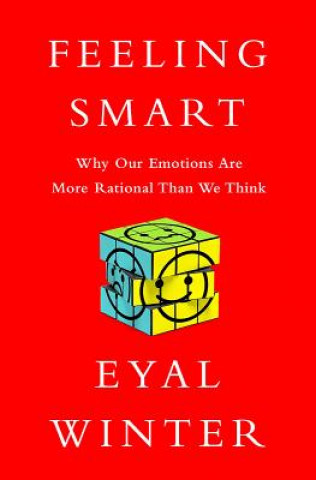
Feeling Smart
 Anglais
 59 b
59 b
Jusqu'à 30 jours pour les retours
Les clients ont également acheté














 /
/
 Livre de poche
 42.31
€
42.31
€





Distinguished authors like Daniel Kahneman, Dan Ariely, and Nassim Nicholas Taleb have written much about the flaws in the human brain when it comes time to make a decision. Our intuitions and passions frequently fail us, leading to outcomes we don't want. In this book, Eyal Winter, Professor of Economics and Director of the Center for the Study of Rationality at the Hebrew University of Jerusalem, wonders: why? If our emotions are so destructive and unreliable, why has evolution left us with them? The answer is that, even though they may not behave in a purely logical manner, our emotions frequently lead us to better, safer, more optimal outcomes. In fact, as Winter discovers, there is often logic in emotion, and emotion in logic. For instance, many mutually beneficial commitments--such as marriage, or being a member of a team--are only possible when underscored by emotion rather than deliberate thought. The difference between pleasurable music and bad noise is mathematically precise; yet it is also the result of evolution. And our inherent overconfidence--the mathematically impossible fact that most people see themselves as above average--affords us advantages in competing for things we benefit from, like food and money and romance. Other subjects illuminated in the book include the rationality of seemingly illogical feelings like trust, anger, shame, ego, and generosity. Already a bestseller in Israel, Rational Emotions brings together game theory, evolution, and behavioral science to produce a surprising and very persuasive defense of how we think, even when we don't.


À propos du livre
Anglais
Catégories

Offrez ce livre dès aujourd'hui
C’est simple
1 Ajouter au panier et choisir l'option Livrer comme cadeau à la caisse. 2 Nous vous enverrons un bon d'achat 3 Le livre arrivera à l'adresse du destinataireCeci pourrait également vous intéresser













 /
Livre relié
162.56
€
/
Livre relié
162.56
€


 /
Livre de poche
42.61
€
/
Livre de poche
42.61
€






Bonjour ! Je suis Libroamiko, votre conseiller littéraire.
Comment puis-je vous aider ?