
 Contact
 Comment faire ses achats
Livraison
Guide d'achat
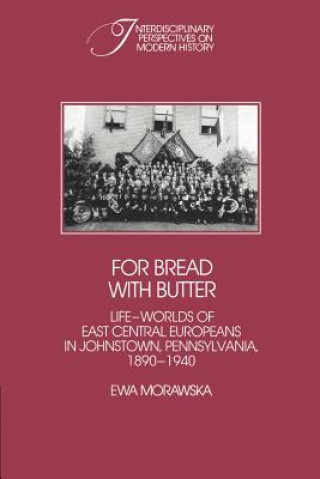
For Bread with Butter
The Life-Worlds of East Central Europeans in Johnstown, Pennsylvania, 1890-1940
 Anglais
 124 b
124 b
Jusqu'à 30 jours pour les retours
Les clients ont également acheté










 /
/
 Livre de poche
 38.33
€
38.33
€






 /
Livre de poche
53.10
€
/
Livre de poche
53.10
€






 /
Livre de poche
10.21
€
/
Livre de poche
10.21
€

Fifty years ago, enactment of the Wagner National Labor Relations Act gave American organized labour what it has regarded ever since as one of its greatest assets: a legislative guarantee of the right of workers to organize and bargain collectively. Yet although the Wagner Act's guarantees remain substantially unaltered, organized labour in America today is in deep decline. Addressing this apparent paradox, Christopher Tomlins offers here a critical examination of the impact of the National Labor Relations Act on American unions. By studying the intentions and goals of policy makers in the context of the development of labour law from the late nineteenth century, and by looking carefully at the course of labour history since the act's passage, Dr Tomlins shows how public policy has been shaped to confine labour's role in the American economy, and that many of the unions' problems stem from the laws which purport to protect them.


À propos du livre
Anglais
Catégories

Offrez ce livre dès aujourd'hui
C’est simple
1 Ajouter au panier et choisir l'option Livrer comme cadeau à la caisse. 2 Nous vous enverrons un bon d'achat 3 Le livre arrivera à l'adresse du destinataireCeci pourrait également vous intéresser









 /
Livre relié
90.42
€
/
Livre relié
90.42
€




 /
Livre de poche
12.13
€
/
Livre de poche
12.13
€


 /
Livre de poche
26.90
€
/
Livre de poche
26.90
€
 /
Livre de poche
20.32
€
/
Livre de poche
20.32
€


 /
Livre de poche
174.89
€
/
Livre de poche
174.89
€