
 Contact
 Comment faire ses achats

Livraison
Guide d'achat
Globalized eLearning
 Anglais
 175 b
Jusqu'à 30 jours pour les retours
Les clients ont également acheté




 /
 Livre relié
 138.18
€




 /
Livre relié
27.45
€



 /
Livre de poche
28.96
€






 /
Livre de poche
34.69
€




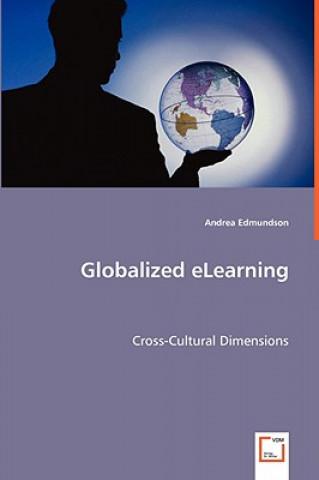
Accelerated globalization challenges educators to provide culturally accessible learning to countries other than their own. However, to do so, we must investigate the differences that may affect the achievement of equitable learning outcomes. Translation is a logical first step. Localization - a process in which symbols, images, etc. are changed to those recognized by the targeted learners - is also an effective adaptation. However, in education, we in advertently imbed our deeply rooted, culturally diverse values into our approaches to learning and teaching. In this book, we explore the existence of cultural dimensions in elearning, a favored tool for global education. We examine whether such differences, between learners in the United States and India, affect learning outcomes and whether learners have different perceptions of, and preferences for, e-learning. Subsequently, we propose the Cultural Adaptation Process (CAP). The CAP Model provides a framework with which online instructors and instructional designers can identify any needs for cultural adaptation - aligned with course content, media, and instructiona lapproaches - within the constraints of their resources.


À propos du livre
Anglais

Offrez ce livre dès aujourd'hui
C’est simple
1 Ajouter au panier et choisir l'option Livrer comme cadeau à la caisse. 2 Nous vous enverrons un bon d'achat 3 Le livre arrivera à l'adresse du destinataireCeci pourrait également vous intéresser
 /
Livre de poche
54.00
€
 /
Livre de poche
61.34
€










 /
Livre de poche
6.53
€





 /
Livre de poche
14.78
€


 /
Livre de poche
7.64
€
 /
Livre de poche
11.36
€




Bonjour ! Je suis Libroamiko, votre conseiller littéraire.
Comment puis-je vous aider ?