
 Contact
 Comment faire ses achats
Livraison
Guide d'achat
Kahlil Gibran
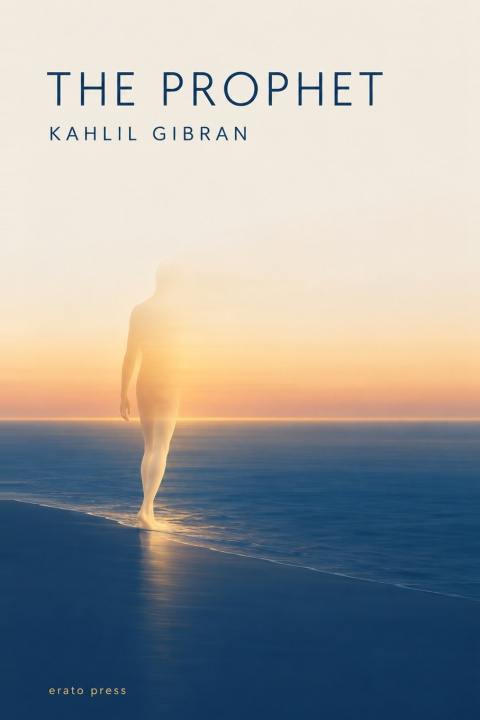
The Prophet (Annotated): The Complete and Unabridged 1923 Text - All Twenty-Eight Discourses, with a New Critical Afterword
 Anglais
 38 b
38 b
 Nouveauté
Jusqu'à 30 jours pour les retours

Twelve years before the story begins, a ship came to the city of Orphalese and took away a man named Almustafa, chosen and beloved, a dawn unto his own day. Now another ship is coming to take him home. Before he boards it, the people of Orphalese gather at the harbor and ask him, one request after another, to leave them something of what he knows. He weeps, and then he answers.
What follows are twenty-six discourses - on love, on marriage, on children, on work, on joy and sorrow, on freedom, on self-knowledge, on religion, and, at the end, on death - framed by the ship's arrival and Almustafa's farewell to a city that does not want him to go. Published by Alfred A. Knopf in 1923, The Prophet became one of the best-selling books of the twentieth century and has never been out of print.
Nearly every cheap or anthologized edition on the market today strips out one thing the first edition insisted on: twelve drawings by Gibran himself, who trained as a painter in Paris before he was ever a writer in English. This edition restores all twelve - the frontispiece and eleven plates, set at the place the 1923 printing gave them, reproduced from the Project Gutenberg scans with the halftone screen and the tone of the original paper left visible, not digitally cleaned away. The drawings illustrate no scene from the text; they are, as this edition's own afterword argues, a second argument in another medium, making visually the same claim the prose makes about a self without fixed boundaries. A text-only Prophet and this one are not quite the same book.
This edition prints Gibran's complete and unabridged text, verified against Project Gutenberg's transcription of the first American edition - nothing added, nothing cut, nothing modernized. Even a few of the original's own peculiarities are preserved rather than silently corrected: an unclosed quotation mark in "On Teaching," left exactly where the 1923 setting left it, and the archaic spelling "Ielool" for the month of Almustafa's departure.
Accompanying the text and the drawings:
- A new critical afterword by Henry Bugalho, reading the book as something stranger than a collection of wisdom sayings - a work spoken entirely in the future tense of "shall," by a man whose authority depends on leaving before anyone can check whether what he said comes true.
- A biographical essay on Kahlil Gibran, from his childhood in the mountains of what was then Ottoman Syria to his death in New York at forty-eight.
- A note on the text documenting the exact source, the illustrations, and every editorial choice made, and not made.
The Prophet belongs on the shelf of classics that shaped a century of inspirational and spiritual writing - read whole, with the images Gibran meant it to carry, not as the internet has learned to excerpt it.


À propos du livre
Anglais

Offrez ce livre dès aujourd'hui
C’est simple
1 Ajouter au panier et choisir l'option Livrer comme cadeau à la caisse. 2 Nous vous enverrons un bon d'achat 3 Le livre arrivera à l'adresse du destinataireBonjour ! Je suis Libroamiko, votre conseiller littéraire.
Comment puis-je vous aider ?