Livraison gratuite à partir de 69.99 euros.

Accédez à une communauté d'amateurs de livres à travers le monde et bénéficiez d’une panoplie d'avantages.
Créer un compte gratuitement
Livraison gratuite avec Zásilkovna à partir de 69.99 €
Coursier DPD 5.99 €
Point Bpost 7.99 €
Bpost 7.49 €
Point DPD 3.49 €
Service de messagerie GLS 4.99 €
 Contact
 Comment faire ses achats
Assistance
Livraison
Coursier DPD 5.99 €
Point Bpost 7.99 €
Bpost 7.49 €
Point DPD 3.49 €
Service de messagerie GLS 4.99 €
Livraison gratuite avec Zásilkovna à partir de 69.99 €
Guide d'achat
Mon compte
▸
Vide :-(
0
Livraison gratuite à partir de 69.99 euros.
Langue
 Anglais
Anglais
Livre
Livre de poche
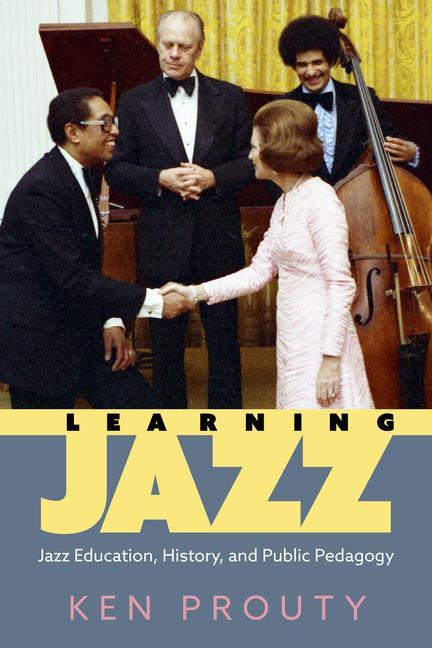
Learning Jazz: Jazz Education, History, and Public Pedagogy addresses a debate that has consumed pra...
Description détaillée
Code Libristo: 43761178
?
 95 b
95 b
95 b
39.14
€
Stockage externe
Expédition sous 10-18 jours
Jusqu'à 30 jours pour les retours
Ceci pourrait également vous intéresser
 /
/
 Livre relié
 154.36
€
154.36
€


Learning Jazz: Jazz Education, History, and Public Pedagogy addresses a debate that has consumed practitioners and advocates since the music's early days. Studies on jazz learning typically focus on one of two methods: institutional education or the kinds of informal mentoring relationships long associated with the tradition. Ken Prouty argues that this distinction works against a common identity for audiences and communities. Rather, what happens within the institution impacts--and is impacted by--events and practices outside institutional contexts.
While formal institutions are well-defined in educational and civic contexts, informal institutions have profoundly influenced the development of jazz and its discourses. Drawing on historical case studies, Prouty details significant moments in jazz history. He examines the ways that early method books capitalized on a new commercial market, commandeering public expertise about the music. Chapters also discuss critic Paul Eduard Miller and his attempts to develop a jazz canon, as well as the disconnect between the spotlighted "great men" and the everyday realities of artists. Tackling race in jazz education, Prouty explores the intersections between identity and assessment; bandleaders Stan Kenton and Maynard Ferguson; public school segregation; Jazz at Lincoln Center; and more. He further examines jazz's "public pedagogy," and the sometimes-difficult relationships between "jazz people" and the general public. Ultimately, Learning Jazz posits that there is room for both institutional and non-institutional forces in the educational realm of jazz.
Actrice
&
Polyglotte
EWA KASP
pro
Regarder la vidéo


Libristo propose la plus grande sélection littéraire en langues étrangères. N’hésitez plus et venez y acheter vos livres.
À propos du livre
Nom complet
Learning Jazz
Auteur
Ken Prouty
Langue
Anglais
Anglais
Reliure
Livre - Livre de poche
Date de parution
2023
Nombre de pages
277
EAN
9781496847911
Code Libristo
43761178
Éditeurs
University Press of Mississippi
Poids
380
Dimensions
152 x 229
Catégories

Offrez ce livre dès aujourd'hui
C’est simple
1 Ajouter au panier et choisir l'option Livrer comme cadeau à la caisse. 2 Nous vous enverrons un bon d'achat 3 Le livre arrivera à l'adresse du destinataire
Conseiller littéraire Libroamiko
En utilisant ce chat, vous communiquez avec une intelligence artificielle générative. En l'utilisant, vous acceptez également le traitement des données personnelles.
Bonjour ! Je suis Libroamiko, votre conseiller littéraire.
Comment puis-je vous aider ?
Bonjour, je suis Libroamiko, puis-je vous aider ?