
 Contact
 Comment faire ses achats
Livraison
Guide d'achat
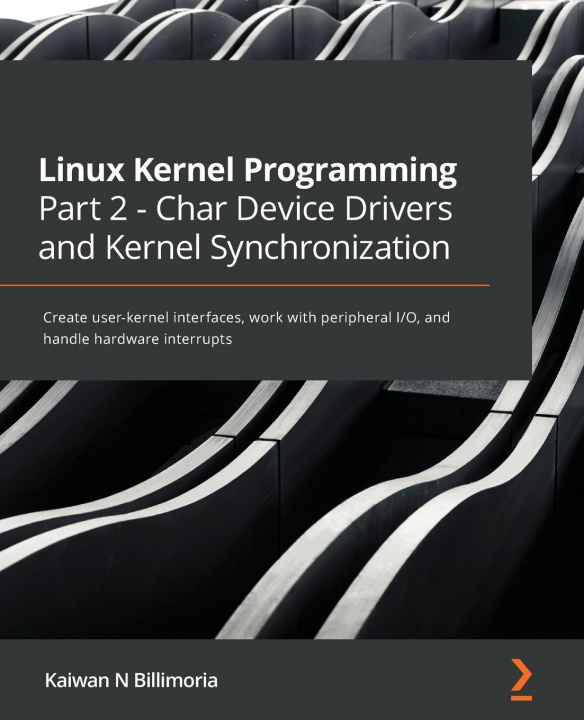
Linux Kernel Programming Part 2 - Char Device Drivers and Kernel Synchronization
Create user-kernel interfaces, work with peripheral I/O, and handle hardware interrupts
 Anglais
 97 b
97 b
Politique de retour sous 30 jours
Les clients ont également acheté




Discover how to write high-quality character driver code, interface with userspace, work with chip memory, and gain an in-depth understanding of working with hardware interrupts and kernel synchronization
Key Features:
- Delve into hardware interrupt handling, threaded IRQs, tasklets, softirqs, and understand which to use when
- Explore powerful techniques to perform user-kernel interfacing, peripheral I/O and use kernel mechanisms
- Work with key kernel synchronization primitives to solve kernel concurrency issues
Book Description:
Linux Kernel Programming Part 2 - Char Device Drivers and Kernel Synchronization is an ideal companion guide to the Linux Kernel Programming book. This book provides a comprehensive introduction for those new to Linux device driver development and will have you up and running with writing misc class character device driver code (on the 5.4 LTS Linux kernel) in next to no time.
You'll begin by learning how to write a simple and complete misc class character driver before interfacing your driver with user-mode processes via procfs, sysfs, debugfs, netlink sockets, and ioctl. You'll then find out how to work with hardware I/O memory. The book covers working with hardware interrupts in depth and helps you understand interrupt request (IRQ) allocation, threaded IRQ handlers, tasklets, and softirqs. You'll also explore the practical usage of useful kernel mechanisms, setting up delays, timers, kernel threads, and workqueues. Finally, you'll discover how to deal with the complexity of kernel synchronization with locking technologies (mutexes, spinlocks, and atomic/refcount operators), including more advanced topics such as cache effects, a primer on lock-free techniques, deadlock avoidance (with lockdep), and kernel lock debugging techniques.
By the end of this Linux kernel book, you'll have learned the fundamentals of writing Linux character device driver code for real-world projects and products.
What You Will Learn:
- Get to grips with the basics of the modern Linux Device Model (LDM)
- Write a simple yet complete misc class character device driver
- Perform user-kernel interfacing using popular methods
- Understand and handle hardware interrupts confidently
- Perform I/O on peripheral hardware chip memory
- Explore kernel APIs to work with delays, timers, kthreads, and workqueues
- Understand kernel concurrency issues
- Work with key kernel synchronization primitives and discover how to detect and avoid deadlock
Who this book is for:
An understanding of the topics covered in the Linux Kernel Programming book is highly recommended to make the most of this book. This book is for Linux programmers beginning to find their way with device driver development. Linux device driver developers looking to overcome frequent and common kernel/driver development issues, as well as perform common driver tasks such as user-kernel interfaces, performing peripheral I/O, handling hardware interrupts, and dealing with concurrency will benefit from this book. A basic understanding of Linux kernel internals (and common APIs), kernel module development, and C programming is required.


À propos du livre
Anglais

Offrez ce livre dès aujourd'hui
C’est simple
1 Ajouter au panier et choisir l'option Livrer comme cadeau à la caisse. 2 Nous vous enverrons un bon d'achat 3 Le livre arrivera à l'adresse du destinataireCeci pourrait également vous intéresser






















Bonjour ! Je suis Libroamiko, votre conseiller littéraire.
Comment puis-je vous aider ?