
 Contact
 Comment faire ses achats
Livraison
Guide d'achat
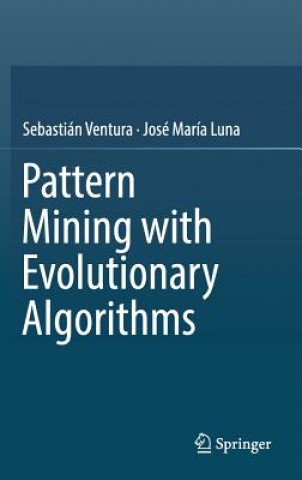
Pattern Mining with Evolutionary Algorithms
 Anglais
 249 b
249 b
Jusqu'à 30 jours pour les retours

This book provides a comprehensive overview of the field of pattern mining with evolutionary algorithms. To do so, it covers formal definitions about patterns, patterns mining, type of patterns and the usefulness of patterns in the knowledge discovery process. As it is described within the book, the discovery process suffers from both high runtime and memory requirements, especially when high dimensional datasets are analyzed. To solve this issue, many pruning strategies have been developed. Nevertheless, with the growing interest in the storage of information, more and more datasets comprise such a dimensionality that the discovery of interesting patterns becomes a challenging process. In this regard, the use of evolutionary algorithms for mining pattern enables the computation capacity to be reduced, providing sufficiently good solutions. § This book offers a survey on evolutionary computation with particular emphasis on genetic algorithms and genetic programming. Also included is an analysis of the set of quality measures most widely used in the field of pattern mining with evolutionary algorithms. This book serves as a review of the most important evolutionary algorithms for pattern mining. It considers the analysis of different algorithms for mining different type of patterns and relationships between patterns, such as frequent patterns, infrequent patterns, patterns defined in a continuous domain, or even positive and negative patterns. § A completely new problem in the pattern mining field, mining of exceptional relationships between patterns, is discussed. In this problem the goal is to identify patterns which distribution is exceptionally different from the distribution in the complete set of data records. Finally, the book deals with the subgroup discovery task, a method to identify a subgroup of interesting patterns that is related to a dependent variable or target attribute. This subgroup of patterns satisfies two essential conditions: interpretability and interestingness. §


À propos du livre
Anglais
Catégories

Offrez ce livre dès aujourd'hui
C’est simple
1 Ajouter au panier et choisir l'option Livrer comme cadeau à la caisse. 2 Nous vous enverrons un bon d'achat 3 Le livre arrivera à l'adresse du destinataireBonjour ! Je suis Libroamiko, votre conseiller littéraire.
Comment puis-je vous aider ?