
 Contact
 Comment faire ses achats
Livraison
Guide d'achat
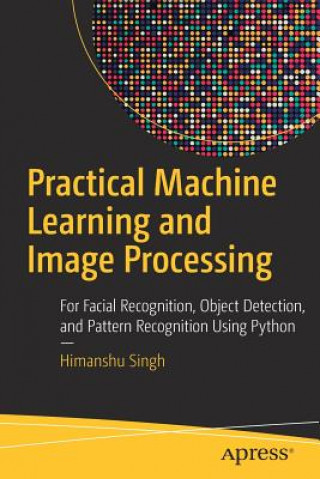
Practical Machine Learning and Image Processing
For Facial Recognition, Object Detection, and Pattern Recognition Using Python
 Anglais
 118 b
118 b
Jusqu'à 30 jours pour les retours
Les clients ont également acheté



 /
/
 Livre de poche
 67.18
€
67.18
€



 /
Livre relié
41.54
€
/
Livre relié
41.54
€
 /
Livre de poche
41.54
€
/
Livre de poche
41.54
€

Gain insights into image-processing methodologies and algorithms, using machine learning and neural networks in Python. This book begins with the environment setup, understanding basic image-processing terminology, and exploring Python concepts that will be useful for implementing the algorithms discussed in the book. You will then cover all the core image processing algorithms in detail before moving onto the biggest computer vision library: OpenCV. You'll see the OpenCV algorithms and how to use them for image processing. The next section looks at advanced machine learning and deep learning methods for image processing and classification. You'll work with concepts such as pulse coupled neural networks, AdaBoost, XG boost, and convolutional neural networks for image-specific applications. Later you'll explore how models are made in real time and then deployed using various DevOps tools. All the concepts in Practical Machine Learning and Image Processing are explained using real-life scenarios. After reading this book you will be able to apply image processing techniques and make machine learning models for customized application. What You Will Learn Discover image-processing algorithms and their applications using Python Explore image processing using the OpenCV library Use TensorFlow, scikit-learn, NumPy, and other libraries Work with machine learning and deep learning algorithms for image processing Apply image-processing techniques to five real-time projects Who This Book Is For Data scientists and software developers interested in image processing and computer vision.


À propos du livre
Anglais

Offrez ce livre dès aujourd'hui
C’est simple
1 Ajouter au panier et choisir l'option Livrer comme cadeau à la caisse. 2 Nous vous enverrons un bon d'achat 3 Le livre arrivera à l'adresse du destinataireCeci pourrait également vous intéresser
 /
Livre relié
85.32
€
/
Livre relié
85.32
€





 /
Livre de poche
59.99
€
/
Livre de poche
59.99
€
 /
Livre de poche
73.26
€
/
Livre de poche
73.26
€

Bonjour ! Je suis Libroamiko, votre conseiller littéraire.
Comment puis-je vous aider ?