
 Contact
 Comment faire ses achats

Livraison
Guide d'achat
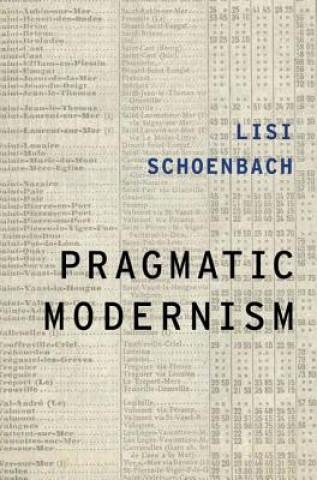
Pragmatic Modernism
 Anglais
 257 b
Jusqu'à 30 jours pour les retours
Les clients ont également acheté



 /
 Livre de poche
 32.66
€











 /
Livre de poche
42.52
€


 /
Livre de poche
28.84
€













Modernism has long been understood as a radical repudiation of the past. Reading against the narrative of modernism-as-break, Pragmatic Modernism traces an alternative strain of modernist thought that grows out of pragmatist philosophy and is characterized by its commitment to gradualism, continuity, and recontextualization. It rediscovers a distinctive response to the social, intellectual, and artistic transformations of modernity in the work of Henry James, Marcel Proust, Gertrude Stein, Oliver Wendell Holmes, John Dewey, and William James. These thinkers share an institutionally-grounded approach to change which emphasizes habits, continuities, and daily life over spectacular events, heroic opposition, and radical rupture. Pragmatic modernists developed an active, dialectical approach to habit, maintaining a critical stance toward mindless repetitions while refusing to romanticize moments of shock or conflict. Through its analysis of pragmatist keywords, including "habit," "institution," "prediction," and "bigness," Pragmatic Modernism offers new readings of works by James, Proust, Stein, and Andre Breton, among others. It shows, for instance, how Stein's characteristic literary innovation--her repetitions--aesthetically materialize the problem of habit; and how institutions--businesses, museums, newspapers, the law, and even the state itself--help to construct the subtlest of personal observations and private gestures in James's novels. This study reconstructs an overlooked strain of modernism. In so doing, it helps us to reimagine the stark choice between political quietism and total revolution that has been handed down to us as modernism's legacy.


À propos du livre
Anglais
Catégories

Offrez ce livre dès aujourd'hui
C’est simple
1 Ajouter au panier et choisir l'option Livrer comme cadeau à la caisse. 2 Nous vous enverrons un bon d'achat 3 Le livre arrivera à l'adresse du destinataireCeci pourrait également vous intéresser




 /
Livre relié
406.75
€



 /
Livre de poche
14.17
€



 /
Livre de poche
8.84
€



 /
Livre
64.83
€






Bonjour ! Je suis Libroamiko, votre conseiller littéraire.
Comment puis-je vous aider ?