
 Contact
 Comment faire ses achats
Livraison
Guide d'achat
 Anglais
 995 b
995 b
Jusqu'à 30 jours pour les retours
Les clients ont également acheté









 /
/
 Livre de poche
 18.35
€
18.35
€


 /
Livre de poche
33.78
€
/
Livre de poche
33.78
€

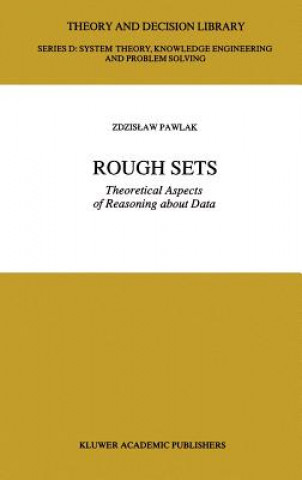
To-date computers are supposed to store and exploit knowledge. At least that is one of the aims of research fields such as Artificial Intelligence and Information Systems. However, the problem is to understand what knowledge means, to find ways of representing knowledge, and to specify automated machineries that can extract useful information from stored knowledge. Knowledge is something people have in their mind, and which they can express through natural language. Knowl edge is acquired not only from books, but also from observations made during experiments; in other words, from data. Changing data into knowledge is not a straightforward task. A set of data is generally disorganized, contains useless details, although it can be incomplete. Knowledge is just the opposite: organized (e.g. laying bare dependencies, or classifications), but expressed by means of a poorer language, i.e. pervaded by imprecision or even vagueness, and assuming a level of granularity. One may say that knowledge is summarized and organized data - at least the kind of knowledge that computers can store.


À propos du livre
Anglais
Catégories

Offrez ce livre dès aujourd'hui
C’est simple
1 Ajouter au panier et choisir l'option Livrer comme cadeau à la caisse. 2 Nous vous enverrons un bon d'achat 3 Le livre arrivera à l'adresse du destinataireCeci pourrait également vous intéresser















 /
Livre relié
172.07
€
/
Livre relié
172.07
€


 /
Livre de poche
63.84
€
/
Livre de poche
63.84
€



Bonjour ! Je suis Libroamiko, votre conseiller littéraire.
Comment puis-je vous aider ?