
 Contact
 Comment faire ses achats

Livraison
Guide d'achat
 Anglais
 159 b
Jusqu'à 30 jours pour les retours
Les clients ont également acheté






 /
 Livre relié
 33.25
€

 /
Livre de poche
11.25
€







 /
Livre de poche
47.93
€




 /
 Cartes géographiques
123.80
€


 /
Livre de poche
10.44
€
 /
 DVD
16.68
€

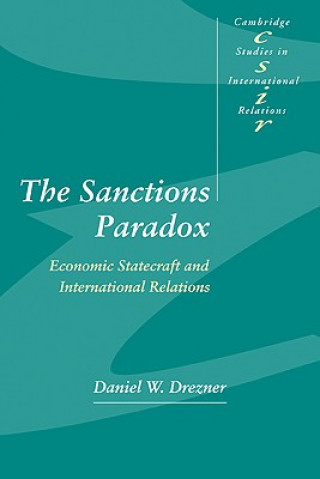
Despite their increasing importance, there is little theoretical understanding of why nation-states initiate economic sanctions, or what determines their success. This 1999 book argues that both imposers and targets of economic coercion incorporate expectations of future conflict as well as the short-run opportunity costs of coercion into their behaviour. Drezner argues that conflict expectations have a paradoxical effect. Adversaries will impose sanctions frequently, but rarely secure concessions. Allies will be reluctant to use coercion, but once sanctions are used, they can result in significant concessions. Ironically, the most favourable distribution of payoffs is likely to result when the imposer cares the least about its reputation or the distribution of gains. The book's argument is pursued using game theory and statistical analysis, and detailed case studies of Russia's relations with newly-independent states, and US efforts to halt nuclear proliferation on the Korean peninsula.


À propos du livre
Anglais

Offrez ce livre dès aujourd'hui
C’est simple
1 Ajouter au panier et choisir l'option Livrer comme cadeau à la caisse. 2 Nous vous enverrons un bon d'achat 3 Le livre arrivera à l'adresse du destinataireCeci pourrait également vous intéresser


 /
Livre de poche
12.85
€









 /
 Jeu
69.96
€
 /
Livre de poche
16.77
€









 /
Livre relié
26.22
€
Bonjour ! Je suis Libroamiko, votre conseiller littéraire.
Comment puis-je vous aider ?