
 Contact
 Comment faire ses achats
Livraison
Guide d'achat
 Anglais
 50 b
50 b
Jusqu'à 30 jours pour les retours
Les clients ont également acheté






 /
/
 Livre de poche
 39.71
€
39.71
€


 /
Livre de poche
13.90
€
/
Livre de poche
13.90
€



 /
Livre de poche
15.50
€
/
Livre de poche
15.50
€

 /
Livre
2.19
€
/
Livre
2.19
€









 /
Livre de poche
14.20
€
/
Livre de poche
14.20
€


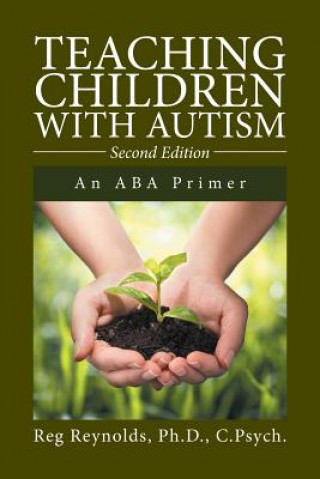
Of the myriad of approaches to the treatment of autism spectrum disorders, Applied Behaviour Analysis (ABA) has the most research support. It is not perfect, and its imperfection is highlighted by the inadequate training of many if not most of its practitioners. Autism is a burgeoning condition - in some locations it is estimated to effect one in every seventy-five children - and the numbers of instructor-therapists required to meet their need for treatment is ensuring that many enter the field with inadequate training. Of course, lack of training is not unique to practitioners of ABA; the entire field is struggling to keep up to the demand for services. A related, and perhaps as serious a problem, is the narrowness of vision that most practitioners bring to the enterprise. ABA has been defined as "the process of systematically applying interventions based upon the principles of learning theory to improve socially significant behaviors to a meaningful degree, and to demonstrate that the interventions employed are responsible for the improvement in behavior." (Baer, Wolf, & Risley. 1968) Being based on the past hundred years of research into how learning works, ABA has universal application - it can be applied to any developmental issue. Unfortunately, while any concept can be defined in behavioural terms - you only have to ask yourself, "What will I use as an indicator of _______?" - it tends to get applied primarily to those developmental issues that are easiest to define in behavioural terms. On the other hand, most non-ABA approaches have relatively little scientific support. This brief introduction to teaching children with autism is intended to serve as a primer for both instructor-therapists and parents alike. Hopefully, it will also move the field beyond the narrow focus that it has enjoyed for the past few decades.


À propos du livre
Anglais

Offrez ce livre dès aujourd'hui
C’est simple
1 Ajouter au panier et choisir l'option Livrer comme cadeau à la caisse. 2 Nous vous enverrons un bon d'achat 3 Le livre arrivera à l'adresse du destinataireCeci pourrait également vous intéresser





 /
Livre de poche
14.70
€
/
Livre de poche
14.70
€


 /
Livre de poche
7.59
€
/
Livre de poche
7.59
€

 /
Livre de poche
14.70
€
/
Livre de poche
14.70
€



 /
/
 CD Audio
33.80
€
CD Audio
33.80
€



 /
Livre relié
128.04
€
/
Livre relié
128.04
€

 /
Livre de poche
14.50
€
/
Livre de poche
14.50
€


Bonjour ! Je suis Libroamiko, votre conseiller littéraire.
Comment puis-je vous aider ?