
 Contact
 Comment faire ses achats
Livraison
Guide d'achat
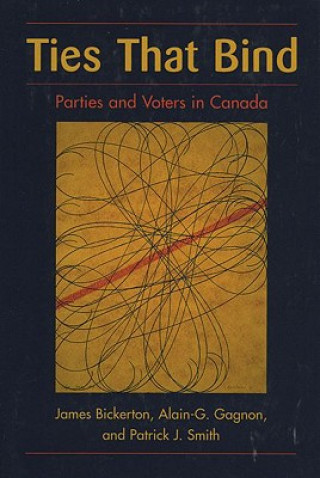
Ties that Bind
 Anglais
 184 b
184 b
Jusqu'à 30 jours pour les retours
Les clients ont également acheté













 /
/
 Livre de poche
 13.65
€
13.65
€





 /
Livre de poche
19.32
€
/
Livre de poche
19.32
€



Viewed from afar, electoral politics in Canada may seem a strange amalgam of predictability and surprise, stability and volatility. At the close of the twentieth century, the party in power is the same one that governed at the beginning of the century and for an inordinate amount of time in between. Yet the contemporary party system seems to bear little relation to that which characterized either turn-of-the-century or mid-century Canadian politics. In fact, several dramatic upheavals have taken place in the relationship between parties and voters. Elections clarify for parties and voters the current character of their relations. Partially obscured, vaguely calibrated, or hidden perils in the voter-party relationship will often rise to the surface during election periods, and the ties that bind diverse communities of voters to particular parties are tested. Clearly, the relationship between Canadian voters and their political parties has seldom been an easy one, especially at election time. However, to describe it as unstable or volatile would be misleading. There have always been strong currents of continuity and stability in voter-party relations in Canada that are deeply rooted in regional political cultures and party histories, in enduring ties between ethnocultural or linguistic groupings and particualr parties, and in the economic and class cleavages that influence left-right ideological divisions. Ties That Bind looks at the socio-economic, ethnolinguistic, and demographic factors in party support; the enduring quality of these social bases; the importance of geography in structuring variations in the voter-party relationship; and electoral change as a function of the strategic decisions of the parties and their leaders and the voter response these decisions evoke.


À propos du livre
Anglais

Offrez ce livre dès aujourd'hui
C’est simple
1 Ajouter au panier et choisir l'option Livrer comme cadeau à la caisse. 2 Nous vous enverrons un bon d'achat 3 Le livre arrivera à l'adresse du destinataireCeci pourrait également vous intéresser

 /
Livre de poche
52.40
€
/
Livre de poche
52.40
€
 /
Livre relié
26.90
€
/
Livre relié
26.90
€




 /
Livre de poche
11.73
€
/
Livre de poche
11.73
€
 /
Livre de poche
8.49
€
/
Livre de poche
8.49
€












 /
Livre relié
69.90
€
/
Livre relié
69.90
€


 /
Livre de poche
37.12
€
/
Livre de poche
37.12
€


Bonjour ! Je suis Libroamiko, votre conseiller littéraire.
Comment puis-je vous aider ?