
 Contact
 Comment faire ses achats
Livraison
Guide d'achat
 Anglais
 349 b
349 b
Jusqu'à 30 jours pour les retours
Les clients ont également acheté


 /
/
 Livre de poche
 26.01
€
26.01
€


 /
Livre relié
105.50
€
/
Livre relié
105.50
€

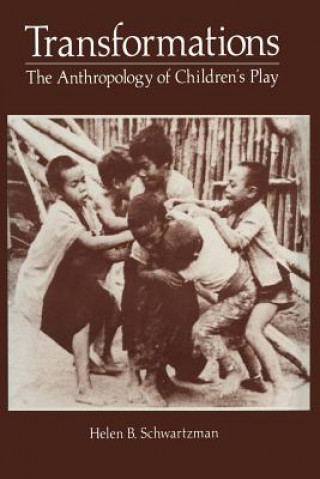
Writing a book about play leads to wondering. In writing this book, I wondered first if it would be taken seriously and then if it might be too serious. Eventually, I realized that these concerns were cast in terms of the major dichotomy that I wished to question, that is, the very perva sive and very inaccurate division that Western cultures make between play and seriousness (or play and work, fantasy and reality, and so forth). The study of play provides researchers with a special arena for re-thinking this opposition, and in this book an attempt is made to do this by reviewing and evaluating studies of children's transformations (their play) in relation to the history of anthropologists' transformations (their theories). While studying play, I have wondered in the company of many individuals. I would first like to thank my husband, John Schwartzman, for acting as both my strongest supporter and, as an anthropological colleague, my severest critic. His sense of nonsense is always novel as well as instructive. I am also very grateful to Linda Barbera-Stein for her Sherlock Holmes style help in locating obscure references, checking and cross-checking information, and patience and persistence in the face of what at times appeared to be bibliographic chaos. I also owe special thanks to my teachers of anthropology-Paul J. Bohannan, Johannes Fabian, Edward T. Hall, and Roy Wagner-whose various orientations have directly and indirectly influenced the approach presented in this book.


À propos du livre
Anglais

Offrez ce livre dès aujourd'hui
C’est simple
1 Ajouter au panier et choisir l'option Livrer comme cadeau à la caisse. 2 Nous vous enverrons un bon d'achat 3 Le livre arrivera à l'adresse du destinataireCeci pourrait également vous intéresser




Bonjour ! Je suis Libroamiko, votre conseiller littéraire.
Comment puis-je vous aider ?