
 Contact
 Hoe winkelen bij ons werkt
Bezorging
Winkelgids
 Engels
 125 b
125 b
Tot 30 dagen retourrecht
Klanten kochten ook











 /
/
 Paperback
 18.19
€
18.19
€












 /
Paperback
31.96
€
/
Paperback
31.96
€
 /
Paperback
65.44
€
/
Paperback
65.44
€

 /
Paperback
19.90
€
/
Paperback
19.90
€



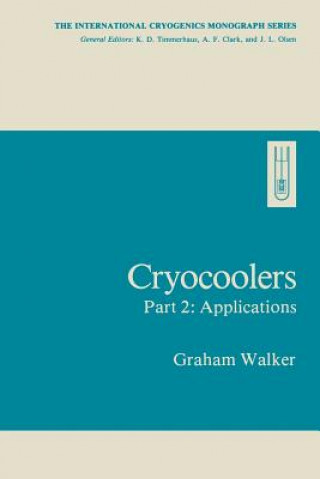
The rapidly expanding use of very low temperatures in research and high technology during the last several decades and the concurrent high degree of activity in cryogenic engineering have mutually supported each other, each improvement in refrigeration technique making possible wider oppor tunities for research and each new scientific discovery creating a need for a refrigerator with special features. In this book, Professor Walker has provided us with an excellent exposition of the achievements of this period, the fundamental principles involved, and a critical examination of the many different cryogenic systems which have led to a new era of low-level refrigeration. I feel fortunate to have had a part in the developments discussed in this book. During the early 1930s I constructed several rotary engines using leather vanes. Their performance was not good, but I was able to liquefy air. I had been impressed by the usefulness of leather cups in tire pumps and in Claude-type engines for air liquefaction. I was trying to find a way to avoid that part of the friction generated by a leather cup as a result of the radial force of the working gas on the cylindrical part of the cup. During the 1950s I built two efficient helium liquefiers in which essentially leather pistons were used.


Informatie over het boek
Engels

Geef dit boek vandaag nog cadeau
Dat gaat heel eenvoudig
1 Voeg het boek toe aan je winkelwagentje en selecteer Als cadeau bezorgen 2 Je krijgt van ons per omgaand een voucher 3 Het boek wordt bezorgd op het adres van de ontvangerDit vind je misschien ook interessant














 /
Paperback
25.53
€
/
Paperback
25.53
€










Hoi! Ik ben Libroamiko, je boekadviseur.
Hoe kan ik je helpen?