
 Contact
 Hoe winkelen bij ons werkt
Bezorging
Winkelgids
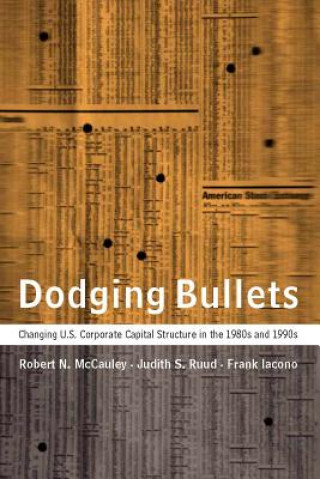
Dodging Bullets
Changing U.S. Corporate Capital Structure in the 1980s and 1990s
 Engels
 29 b
29 b
Tot 30 dagen retourrecht
Klanten kochten ook











 /
/
 Gebonden (paperback)
 16.14
€
16.14
€

The late 1980s saw a huge wave of corporate leveraging. The U.S. financial landscape was dominated by a series of high-stakes leveraged buyouts as firms replaced their equity with new fixed debt obligations. Cash-financed acquisitions and defensive share repurchases also decapitalized corporations. This trend culminated in the sensational debt-financed bidding for RJR-Nabisco, the largest leveraged buyout of all time, before dramatically reversing itself in the early 1990s with a rapid return to equity.This entertaining summary of the broad reshaping of U.S. corporate finance in the last decade and a half looks at three major issues: why corporations leveraged up in the first place, why and how the leverage wave came to an end, and what policy lessons are to be drawn.Using the Minsky-Kindleberger model as a framework, the authors interpret the rise and fall of leveraging as a financial market mania. In the course of chronicling the return to equity in the 1990s, they address a number of important corporate finance questions: How important was the return to equity in relieving corporations' debt burdens? How did the return to equity affect the ability of young high-tech firms to finance themselves without selling out to foreign firms?


Informatie over het boek
Engels
Categorieën

Geef dit boek vandaag nog cadeau
Dat gaat heel eenvoudig
1 Voeg het boek toe aan je winkelwagentje en selecteer Als cadeau bezorgen 2 Je krijgt van ons per omgaand een voucher 3 Het boek wordt bezorgd op het adres van de ontvangerDit vind je misschien ook interessant










Hoi! Ik ben Libroamiko, je boekadviseur.
Hoe kan ik je helpen?