
 Contact
 Hoe winkelen bij ons werkt
Bezorging
Winkelgids
 Engels
 74 b
74 b
Retourneren binnen 30 dagen
Klanten kochten ook




 /
/
 Gebonden (paperback)
 22.95
€
22.95
€





 /
Gebonden (paperback)
35.70
€
/
Gebonden (paperback)
35.70
€





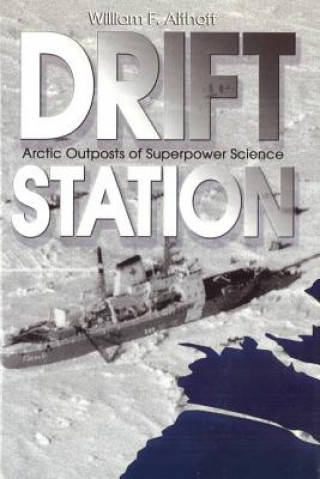
Closed to conventional passage, the Arctic Ocean and peripheral seas have nevertheless known European explorers since the sixteenth century. Systematic observation, however, dates only from the last years of the nineteenth century, with the epic drift of Fridtjof Nansen's ice ship Fram (1893-1896), the first scientific expedition of the modern era. Twentieth-century technology - the icebreaker, radio transmission, nuclear power, and aircraft - opened the Arctic for survey, basic research, and observation. World War II saw the inhospitable circumpolar Arctic transformed into a theater of military operations. The Cold War and the missile age saw governments staking further claims, because only a relatively short arc of maritime boreal waste separated North America and Eurasia. The complex interactions of air, ice, and water that drive circumpolar systems also serve as engines of oceanic and atmospheric circulation. As a result, meteorology, oceanography, geophysics, and many other areas of scientific research in the region soon became acutely linked to the economic, political, and particularly the politico-military interests of the Soviet Union, the United States, Canada, and the oth


Informatie over het boek
Engels
Categorieën

Geef dit boek vandaag nog cadeau
Dat gaat heel eenvoudig
1 Voeg het boek toe aan je winkelwagentje en selecteer Als cadeau bezorgen 2 Je krijgt van ons per omgaand een voucher 3 Het boek wordt bezorgd op het adres van de ontvangerDit vind je misschien ook interessant






 /
Gebonden (paperback)
28.31
€
/
Gebonden (paperback)
28.31
€
 /
Gebonden (paperback)
28.31
€
/
Gebonden (paperback)
28.31
€


 /
Gebonden (paperback)
9.30
€
/
Gebonden (paperback)
9.30
€

 /
Gebonden (paperback)
19.31
€
/
Gebonden (paperback)
19.31
€


 /
Gebonden (harde band)
39.54
€
/
Gebonden (harde band)
39.54
€


 /
Gebonden (paperback)
14.86
€
/
Gebonden (paperback)
14.86
€







Hoi! Ik ben Libroamiko, je boekadviseur.
Hoe kan ik je helpen?