
 Contact
 Hoe winkelen bij ons werkt
Bezorging
Winkelgids
 Engels
 249 b
249 b
Tot 30 dagen retourrecht
Klanten kochten ook









 /
/
 Gebonden (paperback)
 31.71
€
31.71
€







 /
Gebonden (paperback)
14.79
€
/
Gebonden (paperback)
14.79
€









 /
Gebonden (paperback)
77.42
€
/
Gebonden (paperback)
77.42
€


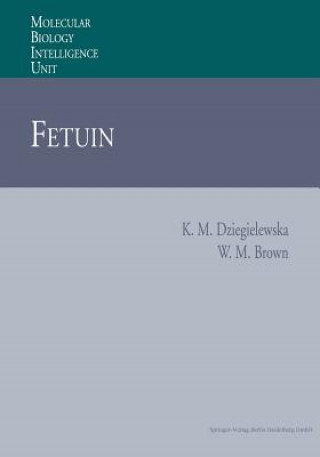
DISCOVERY AND IDENTIFICATION OF FETUIN etuin was discovered in 1944 because of its behavior in the ultra F 1 centrifuge. In his historical review of fetuin, Kai Pedersen, the original discoverer of the protein, wrote, "it (fetuin) was quite different from other serum proteins previously studied. It precipitated abundantly in an ammonium sulphate concentration range in which earlier only 7s and 20s components had been observed. Its molecular weight, 50,000, was the lowest observed for a serum protein; it was very asym metrical; its partial specific volume was quite low-0. 70; the nitrogen content was low, 13g N/100g protein; the isoelectric point was low, pH 3. 5. The cause of the low nitrogen value was the high carbohydrate content of fetuin, 23%. The name fetuin (Latin; fetus) was proposed because this protein was the predominating component in the fetal serum, rapidly decreased, and finally disappeared in the newborn calf. " Proteins with fetuin-like properties were also identified in horse and sheep fetuses, and a small amount of a similar protein was identi fied in human umbilical cord blood and fetal rabbit blood. ' In the early 1950s, with improved fractionation methods, many 2 new proteins were isolated and described. In 1954 Harold Deutsch prepared a new purified fraction of fetuin that was more uniform than Pedersen' s. During the same period, another fetoprotein, a-fetopro 3 fetal blood. Like fetuin, this tein (AFP), was first described in human new component was also an a -globulin.


Informatie over het boek
Engels

Geef dit boek vandaag nog cadeau
Dat gaat heel eenvoudig
1 Voeg het boek toe aan je winkelwagentje en selecteer Als cadeau bezorgen 2 Je krijgt van ons per omgaand een voucher 3 Het boek wordt bezorgd op het adres van de ontvangerDit vind je misschien ook interessant


 /
Gebonden (paperback)
114.71
€
/
Gebonden (paperback)
114.71
€

 /
Gebonden (paperback)
34.45
€
/
Gebonden (paperback)
34.45
€







 /
Gebonden (paperback)
28.77
€
/
Gebonden (paperback)
28.77
€











Hoi! Ik ben Libroamiko, je boekadviseur.
Hoe kan ik je helpen?