
 Contact
 Hoe winkelen bij ons werkt

Bezorging
Winkelgids
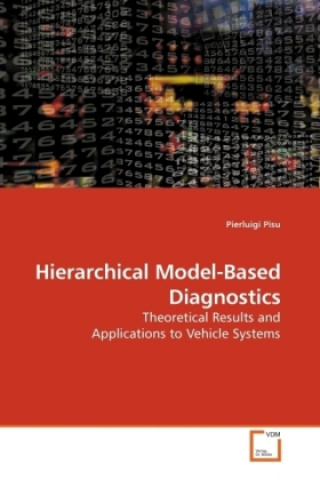
Hierarchical Model-Based Diagnostics
Theoretical Results and Applications to Vehicle Systems
 Engels
 193 b
Tot 30 dagen retourrecht
Klanten kochten ook





 /
 Paperback
 35.20
€


A new framework for hierarchical model-based fault diagnosis in complex systems that combines qualitative and quantitative methodologies and allows flexibility, modularity, and fault isolation with a reduced computational effort is presented. The framework is structurally divided into a passive and active component. The passive component represents the knowledge about the fault behavior of the system under analysis, while the active component is constituted by a supervisory process that uses the model-based knowledge for diagnosis. The fundamental novelty in the presented method is related to the use of fault propagation digraphs having weighted arcs with fault propagation probabilities and upper/lower bounds on fault propagation times, and nodes corresponding to active and activatable fault detection units. The introduction of these properties and components in the digraph, not only makes the proposed scheme more valuable than approaches as FMEA, event trees and FTA, but also allows the use of model-based FDI making the scheme simpler, more attractive and powerful than signed digraphs.


Informatie over het boek
Engels

Geef dit boek vandaag nog cadeau
Dat gaat heel eenvoudig
1 Voeg het boek toe aan je winkelwagentje en selecteer Als cadeau bezorgen 2 Je krijgt van ons per omgaand een voucher 3 Het boek wordt bezorgd op het adres van de ontvangerDit vind je misschien ook interessant


 /
Paperback
101.83
€

 /
Paperback
27.30
€





Hoi! Ik ben Libroamiko, je boekadviseur.
Hoe kan ik je helpen?