
 Contact
 Hoe winkelen bij ons werkt
Bezorging
Winkelgids
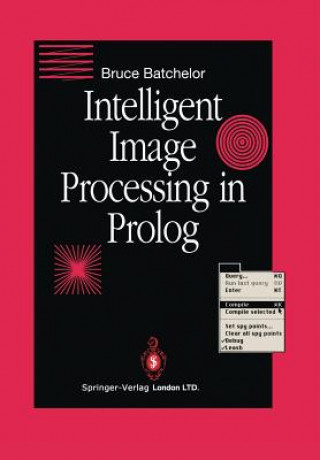
Intelligent Image Processing in Prolog
 Engels
 373 b
373 b
Retourneren binnen 30 dagen
Klanten kochten ook











 /
/
 Gebonden (paperback)
 16.15
€
16.15
€



 /
Gebonden (paperback)
6.75
€
/
Gebonden (paperback)
6.75
€



 /
Gebonden (paperback)
35.63
€
/
Gebonden (paperback)
35.63
€

 /
Gebonden (paperback)
17.56
€
/
Gebonden (paperback)
17.56
€





After a slow and somewhat tentative beginning, machine vision systems are now finding widespread use in industry. So far, there have been four clearly discernible phases in their development, based upon the types of images processed and how that processing is performed: (1) Binary (two level) images, processing in software (2) Grey-scale images, processing in software (3) Binary or grey-scale images processed in fast, special-purpose hardware (4) Coloured/multi-spectral images Third-generation vision systems are now commonplace, although a large number of binary and software-based grey-scale processing systems are still being sold. At the moment, colour image processing is commercially much less significant than the other three and this situation may well remain for some time, since many industrial artifacts are nearly monochrome and the use of colour increases the cost of the equipment significantly. A great deal of colour image processing is a straightforward extension of standard grey-scale methods. Industrial applications of machine vision systems can also be sub divided, this time into two main areas, which have largely retained distinct identities: (i) Automated Visual Inspection (A VI) (ii) Robot Vision (RV) This book is about a fifth generation of industrial vision systems, in which this distinction, based on applications, is blurred and the processing is marked by being much smarter (i. e. more "intelligent") than in the other four generations.


Informatie over het boek
Engels
Categorieën

Geef dit boek vandaag nog cadeau
Dat gaat heel eenvoudig
1 Voeg het boek toe aan je winkelwagentje en selecteer Als cadeau bezorgen 2 Je krijgt van ons per omgaand een voucher 3 Het boek wordt bezorgd op het adres van de ontvangerDit vind je misschien ook interessant




 /
Gebonden (harde band)
199.91
€
/
Gebonden (harde band)
199.91
€


 /
Gebonden (paperback)
19.17
€
/
Gebonden (paperback)
19.17
€
 /
Gebonden (paperback)
7.66
€
/
Gebonden (paperback)
7.66
€
 /
Gebonden (paperback)
12.11
€
/
Gebonden (paperback)
12.11
€



 /
Gebonden (paperback)
13.92
€
/
Gebonden (paperback)
13.92
€





 /
Gebonden (paperback)
19.28
€
/
Gebonden (paperback)
19.28
€




Hoi! Ik ben Libroamiko, je boekadviseur.
Hoe kan ik je helpen?