
 Contact
 Hoe winkelen bij ons werkt
Bezorging
Winkelgids
Naples
 Engels
 71 b
71 b
Tot 30 dagen retourrecht
Klanten kochten ook



 /
/
 Gebonden (paperback)
 30.65
€
30.65
€

 /
Gebonden (paperback)
38.02
€
/
Gebonden (paperback)
38.02
€



















 /
Gebonden (paperback)
86.94
€
/
Gebonden (paperback)
86.94
€

 /
Gebonden (paperback)
76.85
€
/
Gebonden (paperback)
76.85
€

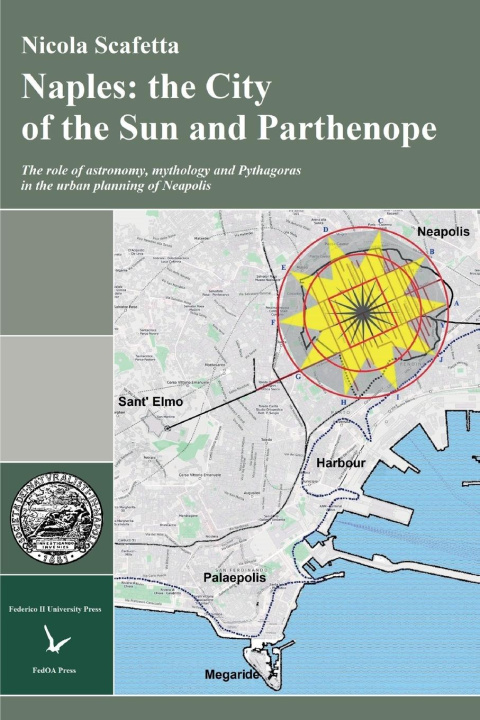
This essay delves into the most intimate secret of Naples through an archaeoastronomical inquiry. It shows that religious and philosophical motivations were central to the urban planning of its ancient Greek centre, Neapolis, built in the 6th-5th centuries BC by Cumaeans and other Greek colonists. The design of the city's streets and its distinctive geographic-astronomical orientation evoked the cults of Apollo (the Greek Sun-god) and Parthenope (the local nymph, recalling the mythical Sibyl of Cumae) at the solstices and equinoxes. The street grid of Neapolis was also inspired by Pythagorean cosmology, as it was designed using the golden ratio and decagonal proportions. All these elements combined to make Neapolis a perfect microcosm, or rather a temple city, centred on the cult of the Sun and Parthenope. Moreover, the city's original religious traditions greatly magnified the impact of the martyrdom of Saint Januarius, facilitating the Christianisation of Neapolis since the 4th century AD. Naples' ancient streets, culture, and Cathedral still preserve the legacy of Neapolis' solar traditions in their geometries, symbols, hymns, sweets, mosaics, and relics. (125 Coloured Figures. FedOAPress - Cavoliniana: Monographies of the Società dei Naturalisti in Napoli. Nicola Scafetta, professor at the University of Naples Federico II, is an expert in Physics of Complex Systems and Sun-Earth interactions. Foreword by Federico Rausa, professor of Classical Archeology at the University of Naples Federico II.)


Informatie over het boek
Engels

Geef dit boek vandaag nog cadeau
Dat gaat heel eenvoudig
1 Voeg het boek toe aan je winkelwagentje en selecteer Als cadeau bezorgen 2 Je krijgt van ons per omgaand een voucher 3 Het boek wordt bezorgd op het adres van de ontvangerDit vind je misschien ook interessant
 /
Gebonden (paperback)
55.87
€
/
Gebonden (paperback)
55.87
€






 /
Gebonden (paperback)
14.82
€
/
Gebonden (paperback)
14.82
€
 /
Gebonden (paperback)
205.15
€
/
Gebonden (paperback)
205.15
€




 /
Gebonden (paperback)
14.82
€
/
Gebonden (paperback)
14.82
€

 /
Gebonden (paperback)
51.33
€
/
Gebonden (paperback)
51.33
€

 /
Gebonden (harde band)
68.48
€
/
Gebonden (harde band)
68.48
€

Hoi! Ik ben Libroamiko, je boekadviseur.
Hoe kan ik je helpen?