
 Contact
 Hoe winkelen bij ons werkt
Bezorging
Winkelgids
 Engels
 82 b
82 b
Dit vind je misschien ook interessant



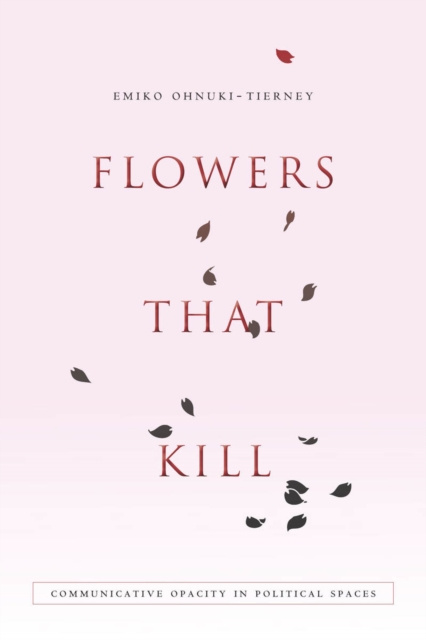
Flowers are beautiful. People often communicate their love, sorrow, and other feelings to each other by offering flowers, like roses. Flowers can also be symbols of collective identity, as cherry blossoms are for the Japanese. But, are they also deceptive? Do people become aware when their meaning changes, perhaps as flowers are deployed by the state and dictators? Did people recognize that the roses they offered to Stalin and Hitler became a propaganda tool? Or were they like the Japanese, who, including the soldiers, did not realize when the state told them to fall like cherry blossoms, it meant their deaths?Flowers That Kill proposes an entirely new theoretical understanding of the role of quotidian symbols and their political significance to understand how they lead people, if indirectly, to wars, violence, and even self-exclusion and self-destruction precisely because symbolic communication is full of ambiguity and opacity. Using a broad comparative approach, Emiko Ohnuki-Tierney illustrates how the aesthetic and multiple meanings of symbols, and at times symbols without images become possible sources for creating opacity which prevents people from recognizing the shifting meaning of the symbols.


Informatie over het boek
Engels

Geef dit boek vandaag nog cadeau
Dat gaat heel eenvoudig
1 Voeg het boek toe aan je winkelwagentje en selecteer Als cadeau bezorgen 2 Je krijgt van ons per omgaand een voucher 3 Het boek wordt bezorgd op het adres van de ontvangerHoi! Ik ben Libroamiko, je boekadviseur.
Hoe kan ik je helpen?